BART SMITH OFFICIAL WEBSITE • AUTHOR • YOUTUBER • COOKIE BAKER • COOKBOOK CHEF • FUTURES TRADER


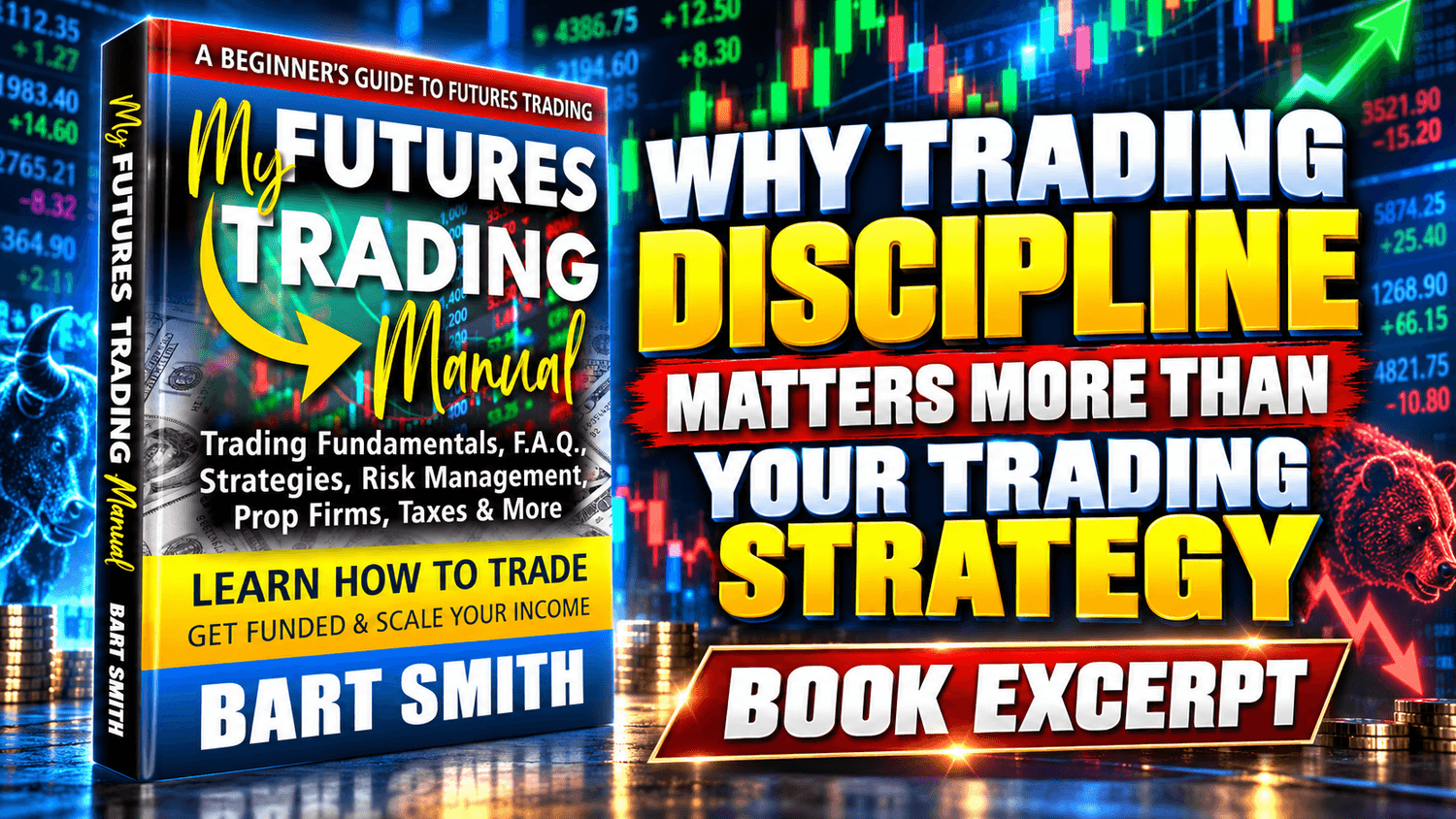
BOOK EXCERPT
📖 Why Trading Discipline Matters More Than Your Trading Strategy
Excerpted and adapted from My Futures Trading Manual book by Bart Smith
Reprinted by Permission
DISCLAIMER: Educational information only. Futures trading involves substantial risk of loss, potentially exceeding your initial investment. Nothing in this article constitutes personalized investment advice or guarantees trading profits.
Want to know something interesting about futures trading? You could have a terrific trading strategy, impressive charting software, powerful indicators, and even an automated trading system. But without DISCIPLINE, you could still lose your shirt! OUCH!
When I first started researching futures trading, I naturally focused on HOW to trade. What indicators should I use? When do I buy? When do I sell? How do I identify a profitable opportunity?
But as I continued learning and eventually began trading myself, something became increasingly clear: Knowing what to do and actually DOING IT are two very different things!
That's where trading discipline comes in.
1. A GREAT STRATEGY ISN'T ENOUGH
A trading strategy provides rules for identifying opportunities, entering positions, managing risk, and exiting trades. But even a carefully tested strategy can experience losing streaks. And what happens when a trader gets impatient, ignores a stop loss, doubles a position, or starts making emotional decisions?
That strategy suddenly becomes a collection of suggestions instead of rules! Discipline means following your trading plan even when your emotions are begging you to do something else. Of course, discipline cannot turn an unprofitable strategy into a profitable one. You need both a sound trading approach AND the ability to execute it consistently.
2. EMOTIONS CAN BECOME EXPENSIVE
Let's say you lose three trades in a row. You're frustrated. You're staring at your screen thinking, "I KNOW I can make that money back!" So, you enter another trade. Then another. Before you know it, you've abandoned your strategy, increased your risk, and potentially turned a manageable losing session into a much larger financial setback.
Welcome to REVENGE TRADING! Fear, greed, impatience, overconfidence, and frustration can all influence trading decisions. That's why experienced traders often establish strict rules regarding position sizes, daily loss limits, and when to stop trading. Your emotions should never be in charge of your trading account!
3. SOMETIMES THE BEST TRADE IS NO TRADE
Here's something beginners may find surprising: You don't have to trade every market movement! In fact, patience is an important trading skill. If market conditions don't match your strategy, WAIT. If you're tired, distracted, or frustrated, STEP AWAY. If you've reached your predetermined daily loss limit, STOP TRADING! The market will continue moving whether you're participating or not. Remember, your objective isn't to collect the greatest number of trades. It's to make thoughtful, calculated decisions while managing your financial exposure.
4. FIVE DISCIPLINE HABITS WORTH DEVELOPING
Here are five practical habits that can help you become a more disciplined trader:
(1) FOLLOW YOUR TRADING PLAN. Establish clear entry, exit, and risk-management rules before placing trades.
(2) RESPECT YOUR LOSS LIMITS. Decide how much you're prepared to risk and avoid increasing that amount impulsively.
(3) CONTROL YOUR POSITION SIZES. Never let excitement or frustration convince you to trade more contracts than your plan allows.
(4) KEEP A TRADING JOURNAL. Record your decisions, results, mistakes, and emotional reactions. Then review what you've learned.
(5) KNOW WHEN TO WALK AWAY. Taking a break can protect you from making unnecessary decisions during stressful trading sessions.
None of these habits guarantees trading profits. However, they can help you execute your strategy more consistently and recognize behaviors that unnecessarily increase risk.
5. WHAT ABOUT AUTOMATED TRADING SYSTEMS?
Even traders using algorithms or automated systems need discipline! Automation may execute trades according to programmed instructions, but someone still has to understand the strategy, monitor performance, manage account risk, and recognize when the system isn't behaving as expected. AUTOMATION DOESN'T ELIMINATE YOUR RESPONSIBILITY!
FINAL THOUGHT
Here's my takeaway: YOUR TRADING STRATEGY TELLS YOU WHAT TO DO. YOUR DISCIPLINE DETERMINES WHETHER YOU ACTUALLY DO IT!
Learning to trade futures requires more than understanding charts and clicking buttons. It requires patience, emotional control, realistic expectations, and a willingness to keep improving. Find a qualified mentor, practice regularly, study your mistakes, and remember that protecting your trading capital is just as important as pursuing profits. Learn the strategy, master your behavior, and give yourself time to develop the skills!
WANT TO LEARN MORE?
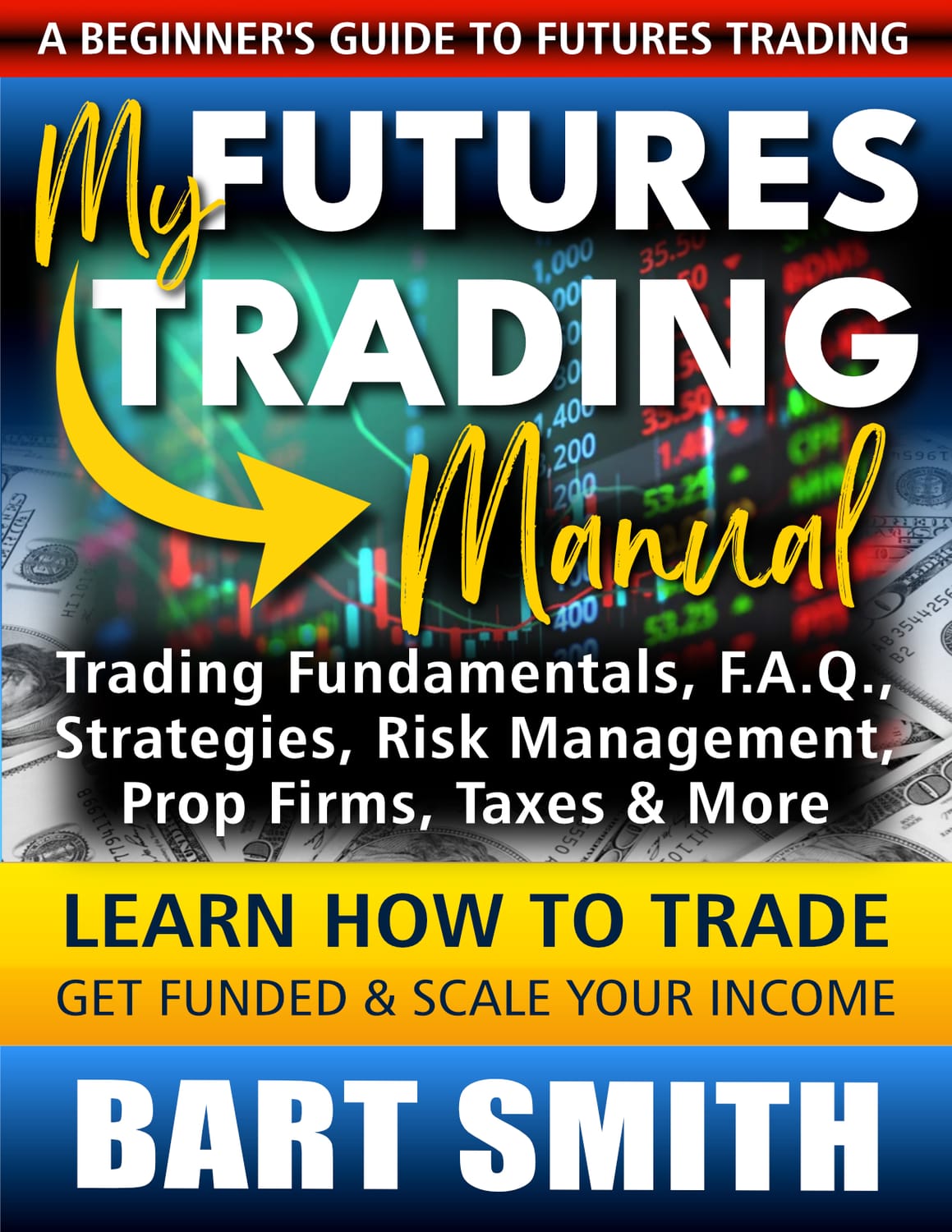
If you liked this article, check out my book, My Futures Trading Manual, where I've organized my research, notes, beginner questions, trading fundamentals, strategies, risk management information, and prop firm resources into one easy-to-read, full-color educational manual. Learn from my notes, avoid unnecessary mistakes, and join me on the journey as we continue learning about futures trading together!
(THIS CONTINUES IN THE BOOK)
# # #
WOULD YOU LIKE TO:
RETURN TO THE:
WOULD YOU LIKE TO:
Website Design by Bart Smith
© Bart Smith | All Rights Reserved