BART SMITH OFFICIAL WEBSITE • AUTHOR • YOUTUBER • COOKIE BAKER • COOKBOOK CHEF • FUTURES TRADER


BOOK EXCERPT
📖 Prop Firm Evaluations: What Are They & What Every Futures Trader Should Know Before Using Them
Excerpted and adapted from My Futures Trading Manual book by Bart Smith
Reprinted by Permission
DISCLAIMER: Educational information only. Futures trading involves substantial risk of loss, potentially exceeding your initial investment. Nothing in this article constitutes personalized investment advice or guarantees trading profits.
Interested in trading futures with a funded account but don't have a fortune sitting in your bank account? Well, you may have heard about PROP FIRM EVALUATIONS, also called trading challenges!
These programs give aspiring traders an opportunity to demonstrate their trading skills under specific rules before potentially qualifying for a funded account.
Sounds exciting? YOU BET! But there's more to the process than simply purchasing a challenge, making a few profitable trades, and collecting a paycheck.
Let's explore what these evaluations involve and what you should know BEFORE spending your hard-earned money!
WHAT EXACTLY IS A PROP FIRM EVALUATION?
A prop firm evaluation is essentially a trading test. You purchase access to an evaluation account, typically trade in a simulated environment, and attempt to reach a predetermined profit target without breaking the firm's rules. For example, a company might advertise a $50,000 evaluation account. That DOES NOT mean they're handing you $50,000 in cash! It's a designated account size with specific trading limits and requirements. If you pass the evaluation, you may qualify for the next stage of the firm's funded trading program.
WHAT DOES IT TAKE TO PASS?
1. PROFIT TARGETS: You must generally achieve a specified trading profit while remaining within the evaluation's rules.
2. DRAWDOWN LIMITS: Your account cannot fall below certain loss thresholds. Some limits are fixed; others move as your account reaches new highs. THIS IS HUGE!
3. DAILY LOSS LIMITS: Some firms restrict how much you're permitted to lose during one trading session.
4. CONSISTENCY REQUIREMENTS: Certain programs restrict how much of your total profit can come from a single trading day.
5. TRADING RESTRICTIONS: Rules may govern news-event trading, overnight positions, automated systems, maximum contract sizes, and minimum trading days.
BREAK THE RULES, AND YOU COULD LOSE YOUR CHALLENGE!
WHAT HAPPENS IF YOU FAIL?
Here's where reality enters the picture. You might have a profitable trading strategy and STILL fail an evaluation because you exceeded a drawdown limit, traded too many contracts, or violated another requirement. Depending on the company, you may be able to purchase a reset or start another challenge. But remember, evaluation fees, resets, subscriptions, and activation charges can add up quickly. A relatively inexpensive challenge can become an expensive learning experience if you repeatedly purchase replacements without improving your trading habits.
WHAT HAPPENS AFTER YOU PASS?
CONGRATULATIONS! But don't start celebrating those imaginary paychecks just yet! Passing an evaluation is only one milestone. Your next account may still be simulated, and you'll likely encounter additional trading rules, account activation requirements, payout restrictions, and possibly a required profit cushion. Even profitable trades don't automatically translate into withdrawable cash.
PASSING AN EVALUATION, MAINTAINING A FUNDED ACCOUNT, AND ACTUALLY RECEIVING A PAYOUT ARE THREE DIFFERENT ACCOMPLISHMENTS!
HOW SHOULD BEGINNERS PREPARE?
Here's my suggestion: PRACTICE BEFORE YOU PAY!
Spend time paper trading. Learn your software, understand position sizing, develop a trading plan, and practice following the exact rules of the evaluation you're considering.
Keep a trading journal. Study your losses. Learn how trailing drawdowns work. And get guidance from an experienced, qualified trading mentor!
Before purchasing a challenge, research the company's reputation, fees, withdrawal policies, trading restrictions, and customer support. Read the CURRENT rules rather than relying entirely on promotional claims or outdated reviews.
FINAL THOUGHT
Here's something I strongly believe: A PROP FIRM EVALUATION SHOULD TEST YOUR TRADING PREPARATION, NOT SUBSTITUTE FOR IT! There is nothing wrong with having the goal of getting funded, building your skills, and eventually qualifying for cash payouts. But nobody should mistake these opportunities for guaranteed income or easy money. Take your time, learn the rules, practice consistently, and remember that a successful trading journey is built through education, discipline, risk management, and experience.
LEARN FIRST. PRACTICE SECOND. TAKE THE CHALLENGE WHEN YOU'RE PREPARED!
WANT TO LEARN MORE?
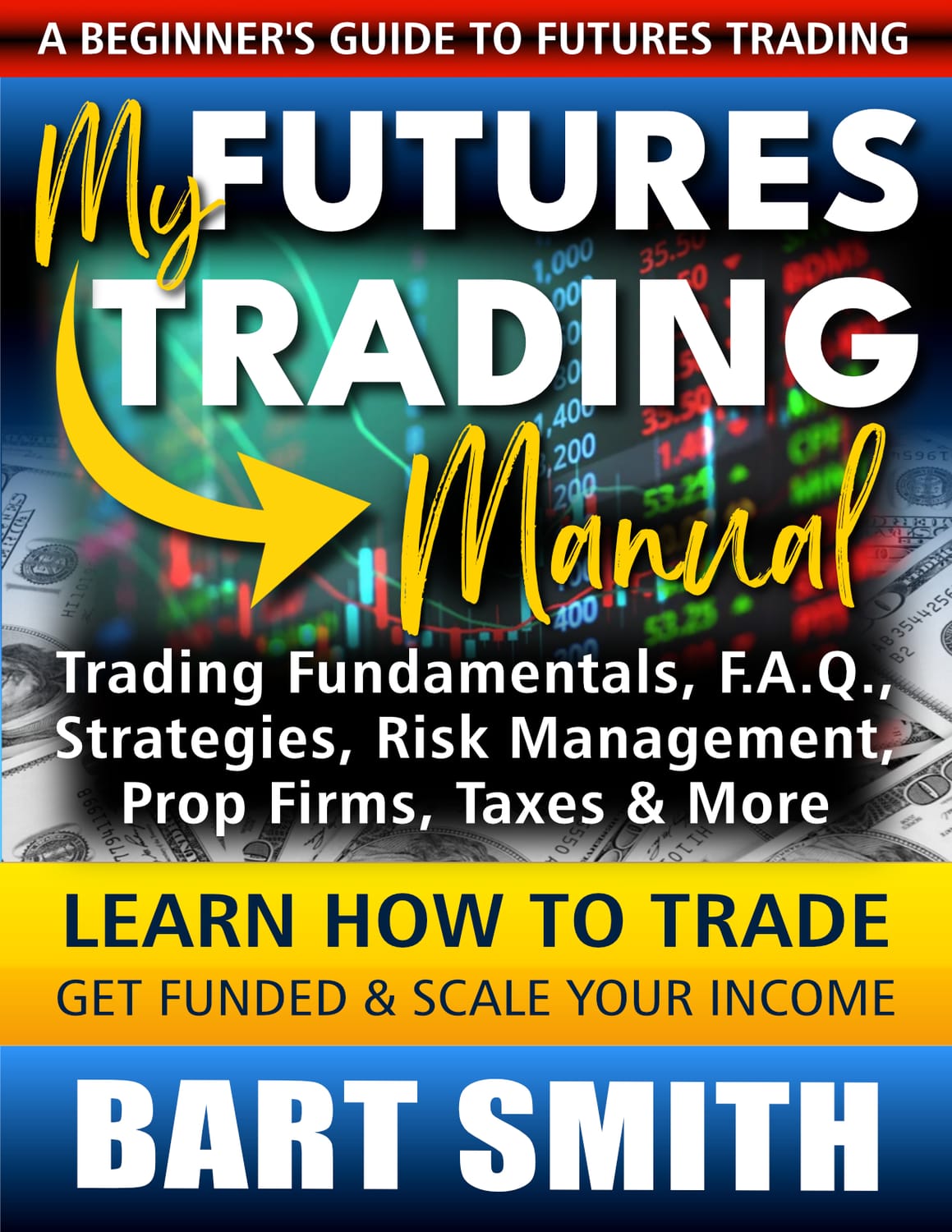
If you liked this article, check out my book, My Futures Trading Manual, where I've organized my research, notes, beginner questions, trading fundamentals, strategies, risk management information, and prop firm resources into one easy-to-read, full-color educational manual. Learn from my notes, avoid unnecessary mistakes, and join me on the journey as we continue learning about futures trading together!
(THIS CONTINUES IN THE BOOK)
# # #
WOULD YOU LIKE TO:
RETURN TO THE:
WOULD YOU LIKE TO:

Website Design by Bart Smith
© Bart Smith | All Rights Reserved