BART SMITH OFFICIAL WEBSITE • AUTHOR • YOUTUBER • COOKIE BAKER • COOKBOOK CHEF • FUTURES TRADER


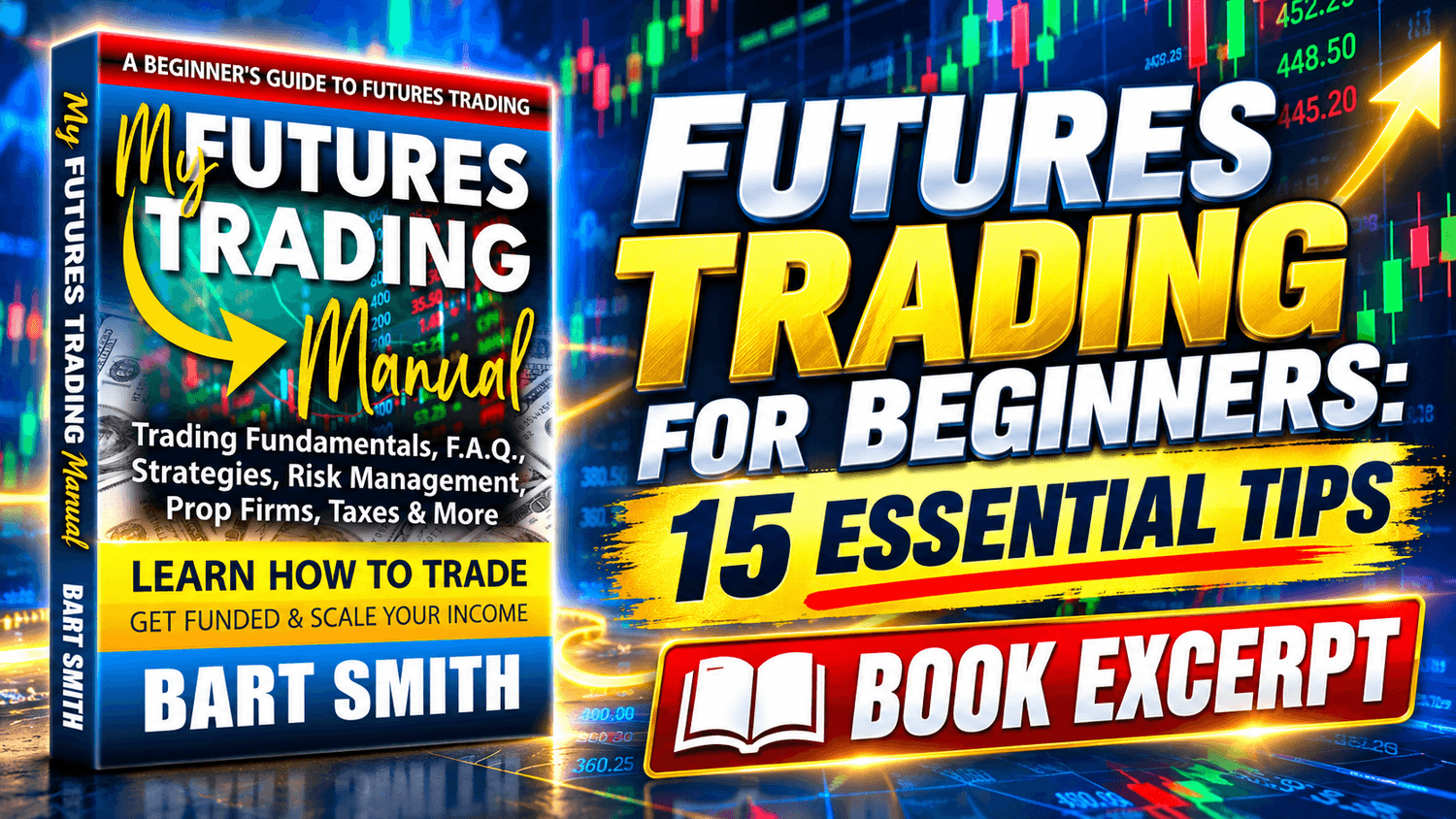
BOOK EXCERPT
📖 Futures Trading For Beginners: 15 Essential Tips
Excerpted and adapted from My Futures Trading Manual book by Bart Smith
Reprinted by Permission
DISCLAIMER: Educational information only. Futures trading involves substantial risk of loss, potentially exceeding your initial investment. Nothing in this article constitutes personalized investment advice or guarantees trading profits.
Thinking about learning how to trade futures? GOOD FOR YOU! Futures trading can be fascinating, challenging, and potentially rewarding.
But before you start clicking BUY and SELL buttons, there's a lot you should understand. Trust me, I had plenty of questions when I first started researching futures trading.
In fact, those questions inspired me to write an entire book about the subject! Here are 15 essential tips to help you get started on the right foot.
1. Understand What Futures Trading Is
Futures are contracts tied to assets such as stock market indexes, gold, crude oil, and agricultural commodities. Traders attempt to profit from price movements by buying or selling these contracts. But remember, prices can move against you just as quickly!
2. Learn How Buying And Selling Work
Think prices will rise? You can BUY (go long). Think they'll fall? You can SELL (go short). Futures allow traders to take positions in either direction, but both involve financial risk.
3. Understand Leverage BEFORE Using It
Leverage allows you to control a contract worth considerably more than the money required as margin. That's exciting when trades work, but potentially devastating when they don't. Learn how margin and leverage work before risking real money.
4. Get Familiar With Trading Terminology
Ticks, points, contracts, margins, drawdowns, stop losses, and position sizing. These aren't just fancy trading words. They're essential concepts you need to understand to make informed decisions.
5. Choose Your Trading Markets Carefully
From the S&P 500 and Nasdaq to gold and crude oil, futures markets offer plenty of choices. Start by studying one or two markets rather than trying to follow everything at once.
6. Learn How Trading Platforms Work
Before placing trades, learn how to read charts, enter orders, set stop losses, monitor positions, and close trades. A mistaken click can become an expensive lesson!
7. Start With Paper Trading
Practice using a simulated trading account before risking actual capital. Paper trading allows you to learn platform mechanics, test strategies, and make mistakes without losing real money.
8. Find A Qualified Trading Mentor
This is one recommendation I strongly believe in: GET A MENTOR! Learn from experienced traders who can explain their methods, demonstrate risk management, and help you understand what you're doing.
9. Develop A Trading Plan
Your plan should define what you trade, when you trade, how you enter and exit positions, and how much you're prepared to risk. Trading without a plan is a great way to let emotions make your decisions.
10. Always Manage Your Risk
Set sensible loss limits, understand contract values, and avoid risking money you cannot afford to lose. Stop-loss orders can help manage risk, although fast-moving markets can produce fills worse than your intended stop price.
11. Control Your Emotions
Fear, greed, impatience, and overconfidence can influence trading decisions. Learn to recognize these emotions and avoid chasing trades or attempting to recover losses impulsively.
12. Know When NOT To Trade
You don't have to trade every market movement! Sometimes the smartest decision is to stay out, especially when conditions don't match your strategy or you're not thinking clearly.
13. Understand Prop Firms And Funded Accounts
Some proprietary trading firms offer evaluation programs that may lead to funded trading opportunities. Study their rules, fees, drawdown limits, payout requirements, and whether accounts are simulated or live before signing up.
14. Keep A Trading Journal
Record your trades, reasons for entering, outcomes, mistakes, and lessons learned. Reviewing your journal helps you identify patterns and determine where improvement is needed.
15. Keep Learning And Improving
Trading isn't something you master overnight. Read, watch, study, practice, seek feedback, and develop your skills gradually. Experience takes time, and even experienced traders experience losses.
FINAL THOUGHT
Here's something I've learned: Futures trading isn't about finding a magic button that prints money. It's about education, preparation, discipline, risk management, and practical experience. Start small, ask questions, find a good mentor, and give yourself permission to be a BEGINNER! Nobody becomes a skilled trader simply by reading a book. But a good book can certainly help you get started!
WANT TO LEARN MORE?
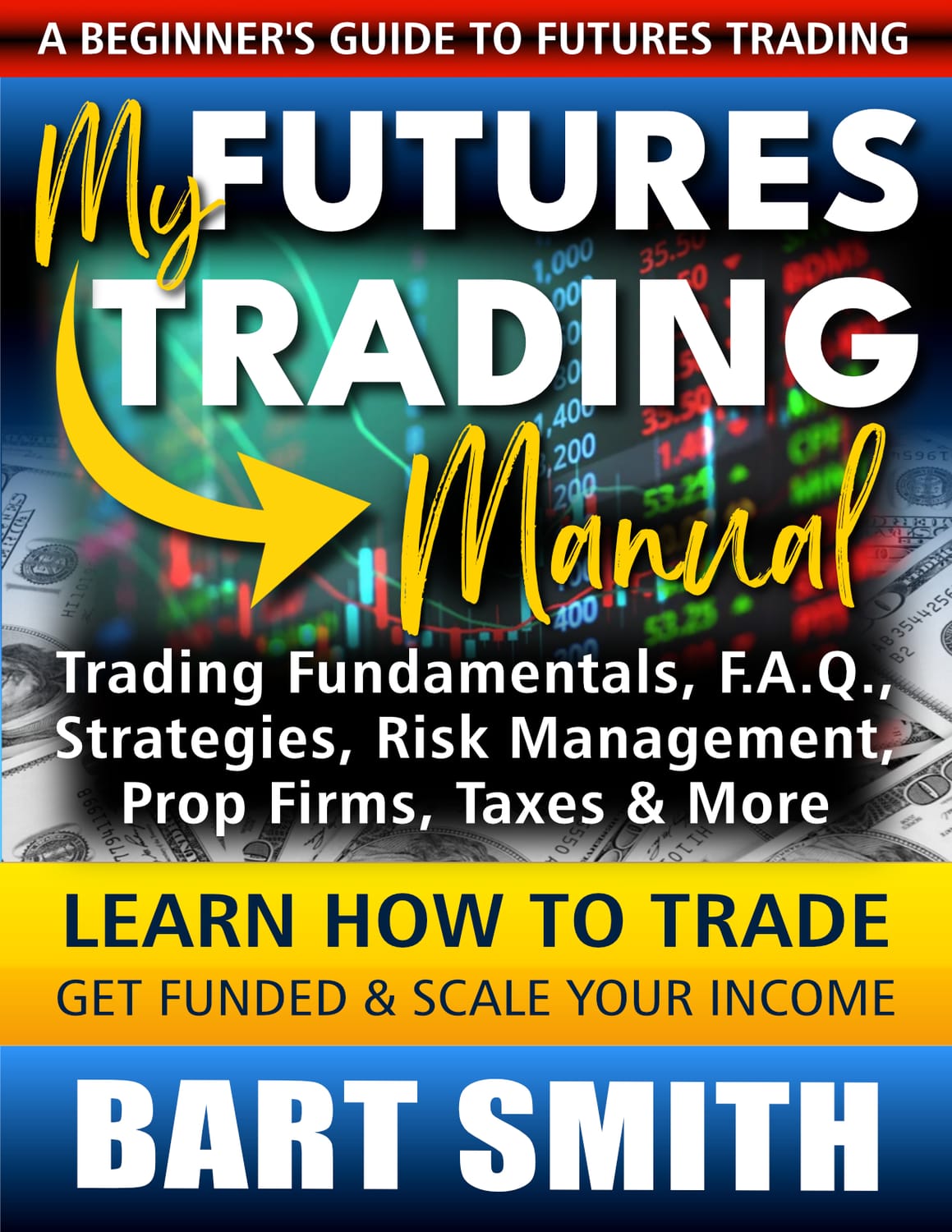
Check out my book, My Futures Trading Manual, where I've organized my research, notes, beginner questions, trading fundamentals, strategies, risk management information, and prop firm resources into one easy-to-read, full-color educational manual.
(THIS CONTINUES IN THE BOOK)
# # #
WOULD YOU LIKE TO:
RETURN TO THE:
WOULD YOU LIKE TO:

Website Design by Bart Smith
© Bart Smith | All Rights Reserved