BART SMITH OFFICIAL WEBSITE • AUTHOR • YOUTUBER • COOKIE BAKER • COOKBOOK CHEF • FUTURES TRADER



BOOK EXCERPT
📖 Funded Futures Trading Accounts: 10 Things To Know
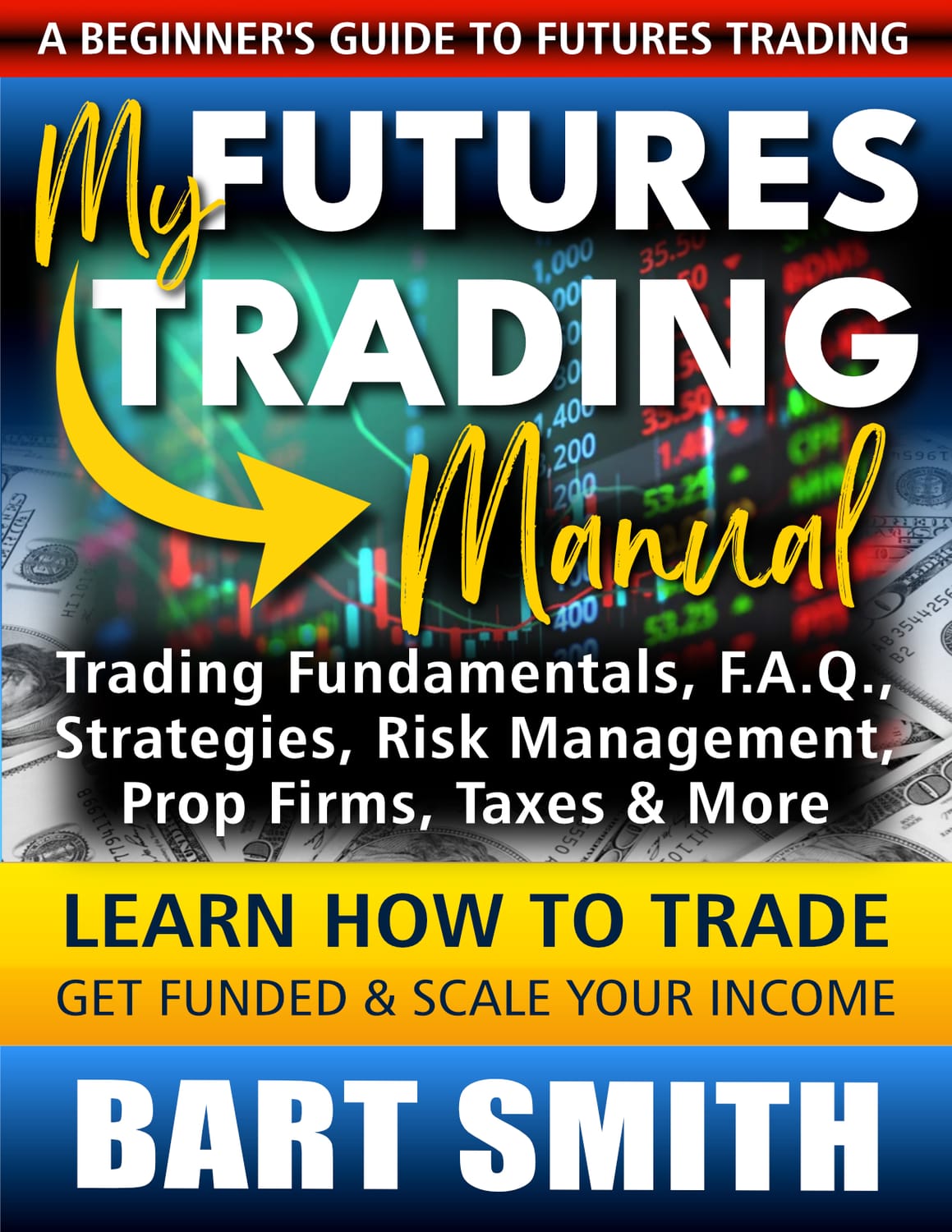
Excerpted and adapted from My Futures Trading Manual book by Bart Smith
Reprinted by Permission
DISCLAIMER: Educational information only. Futures trading involves substantial risk of loss, potentially exceeding your initial investment. Nothing in this article constitutes personalized investment advice or guarantees trading profits.
Ever wondered how futures traders get access to trading accounts advertised at $50,000, $100,000, or even more without depositing that entire amount themselves? Welcome to the world of PROP FIRMS AND FUNDED FUTURES TRADING ACCOUNTS!
When I first started researching futures trading, this concept fascinated me. Rather than relying entirely on your own trading capital, certain companies offer programs where traders can qualify for funded accounts by demonstrating their trading abilities. Sounds interesting, right? YOU BET! But before you purchase your first challenge, here are ten things you should know.
1. What Is A Prop Firm?
A proprietary trading firm (prop firm) provides opportunities for traders to participate in trading programs under specific rules. Depending on the firm, these programs may involve simulated accounts, live capital, or a combination of both. In return, qualifying traders may receive a share of eligible trading profits.
2. What Is A Trading Challenge?
Many prop firms require you to pass an evaluation, commonly called a CHALLENGE. You'll trade according to their rules while attempting to reach a predetermined profit target without exceeding the firm's loss limits.
3. How Much Does A Challenge Cost?
Evaluation fees vary considerably by firm, account size, and program. Some challenges cost relatively little, while others cost hundreds of dollars. Watch for subscriptions, activation charges, reset fees, and other expenses. READ THE FINE PRINT!
4. Understand Your Profit Target
A $50,000 evaluation account might require you to achieve a specified profit target before qualifying. But that $50,000 is generally the advertised account size, NOT $50,000 in cash you can withdraw or necessarily the amount you can lose.
5. Know Your Drawdown Rules
THIS ONE IS HUGE! Drawdown limits determine how much your account can decline before violating the firm's rules. Some limits are fixed, while others trail your account's highest balance or equity. Understanding these calculations is absolutely essential.
6. What Happens If You Fail?
You might violate a drawdown limit, break a trading rule, or otherwise fail the evaluation. Depending on the firm, you may be able to reset your challenge, purchase another evaluation, or try again under different conditions. Failures cost money, so learn from every attempt!
7. What Happens When You Pass?
Congratulations! Passing an evaluation may qualify you for the firm's next account stage. However, approval, activation requirements, trading permissions, and account restrictions vary. A funded account isn't automatically a live brokerage account, and passing doesn't guarantee future payouts.
8. What's A Cushion, And Why Does It Matter?
Some funded programs require you to build an account profit buffer, sometimes called a CUSHION, before withdrawing money. This helps you maintain sufficient room above the firm's drawdown threshold. The amount and withdrawal rules depend on the program.
9. How Do You Get Paid?
Eligible traders may request payouts after satisfying requirements involving profits, minimum trading days, consistency, account balances, or withdrawal schedules. Firms may also retain a portion of eligible profits. A PROFITABLE TRADE DOES NOT AUTOMATICALLY MEAN WITHDRAWABLE CASH!
10. Can You Trade Multiple Funded Accounts?
Some firms permit multiple funded accounts or copy trading, where trades placed in one account are replicated across others. This can create additional opportunities, but also multiplies exposure to losses, fees, technical problems, and account-rule violations. Start by understanding ONE account before considering several!
FINAL THOUGHT
Funded futures trading accounts can provide an interesting pathway for traders seeking additional trading opportunities, but they're NOT free money or a shortcut to financial success. My advice? LEARN FIRST. PRACTICE SECOND. UNDERSTAND THE RULES. THEN DECIDE WHETHER A CHALLENGE MAKES SENSE FOR YOU!
Get a qualified mentor, practice on simulated accounts, and remember that passing an evaluation, maintaining an account, and receiving actual cash payouts are three entirely different accomplishments. Patience, discipline, and risk management matter at every stage!
WANT TO LEARN MORE?
If you liked this article, check out my book, My Futures Trading Manual, where I've organized my research, notes, beginner questions, trading fundamentals, strategies, risk management information, and prop firm resources into one easy-to-read, full-color educational manual. Learn from my notes, avoid unnecessary mistakes, and join me on the journey as we continue learning about futures trading together!
(THIS CONTINUES IN THE BOOK)
# # #
WOULD YOU LIKE TO:
RETURN TO THE:
WOULD YOU LIKE TO:

Website Design by Bart Smith
© Bart Smith | All Rights Reserved