BART SMITH OFFICIAL WEBSITE • AUTHOR • YOUTUBER • COOKIE BAKER • COOKBOOK CHEF • FUTURES TRADER


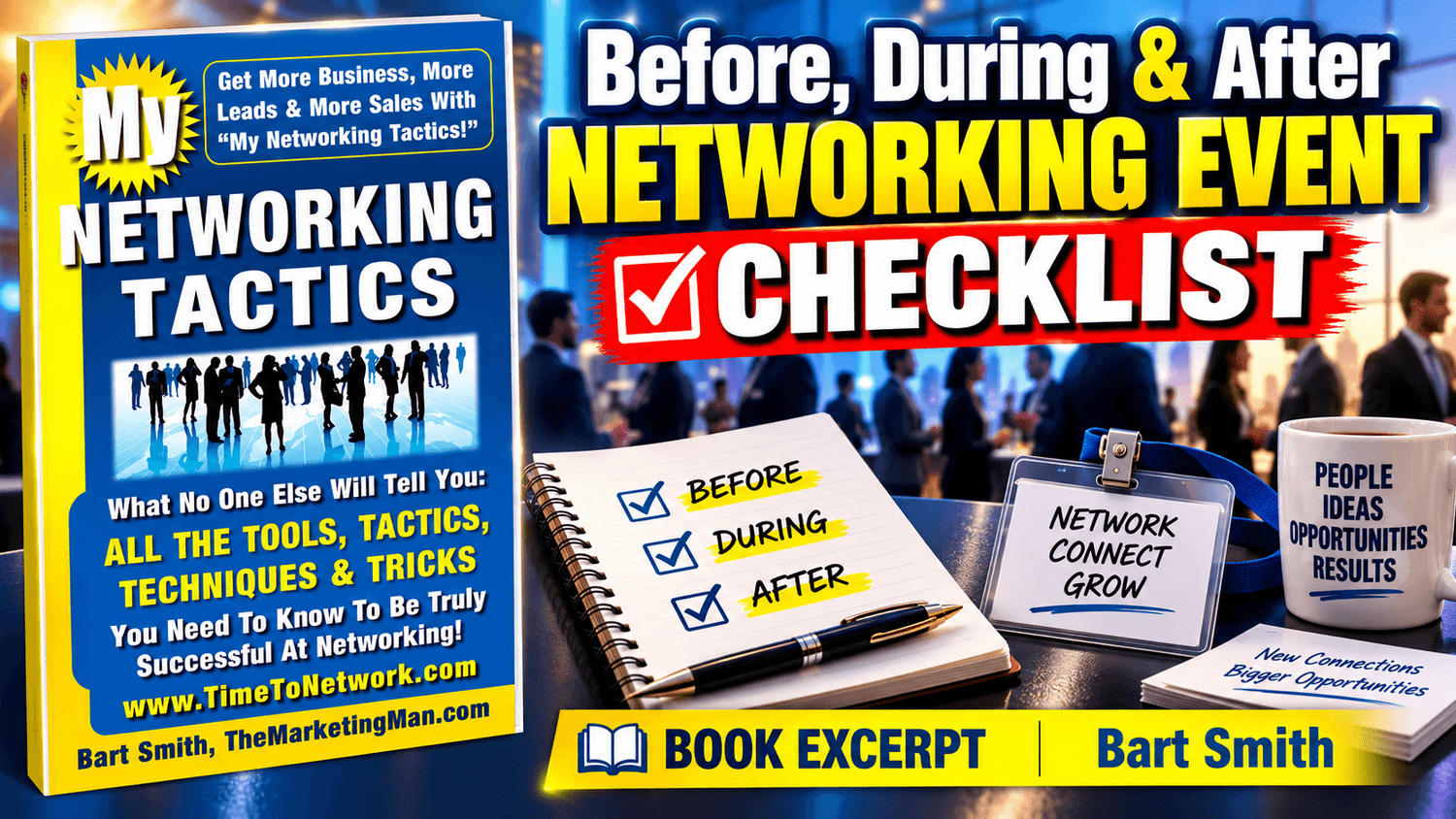
BOOK EXCERPT
📖 Before, During & After Networking Event Checklist
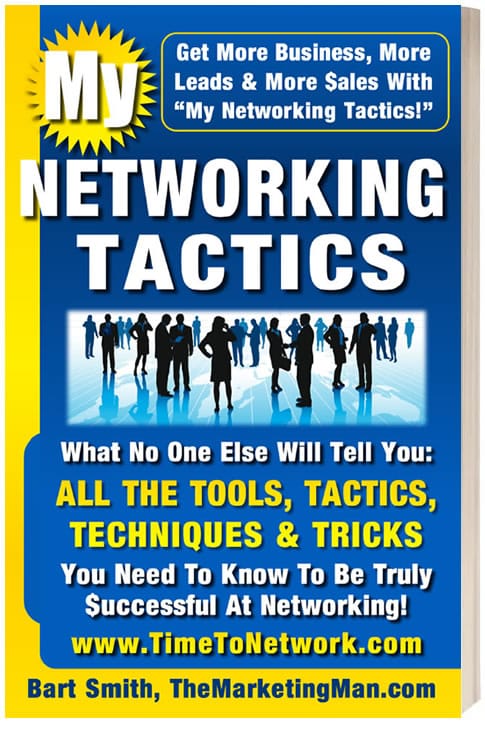
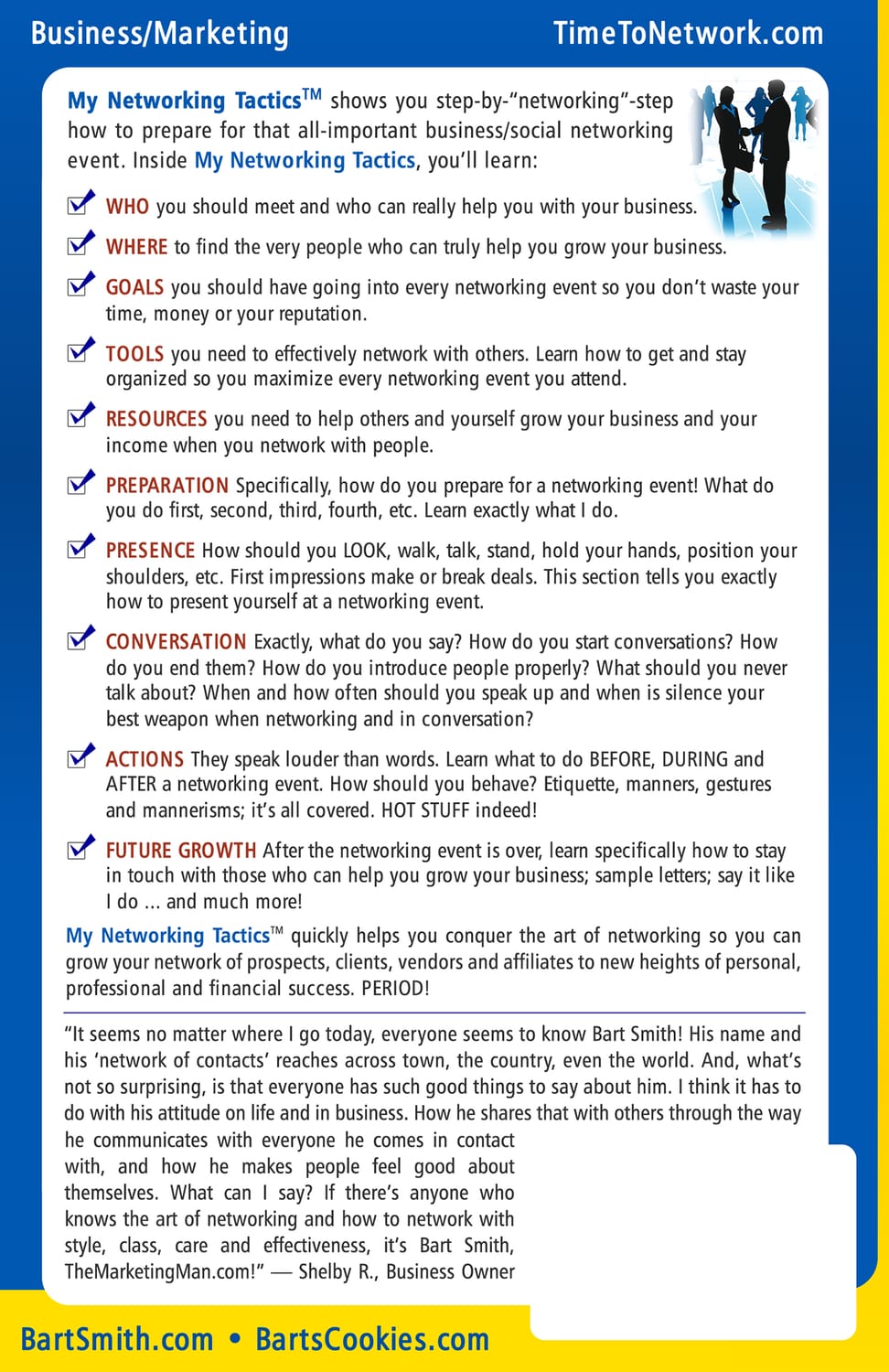
Excerpted and adapted from My Networking Tactics book by Bart Smith
Reprinted by Permission
The results you get from a networking event depend on more than what happens inside the room.
Preparation before the event, your actions during the event and your follow-up afterward all matter. In My Networking Tactics, I describe this overall philosophy as Prepare, Promote and Perpetuate.
Use this checklist as a simple roadmap for your next networking event.
BEFORE THE EVENT
1. Define your goal.
Know why you are attending and what you hope to walk away with.
2. Identify who you want to meet.
Think in terms of clients, vendors, affiliates, speakers, media contacts, partners or other resources.
3. Research the organization.
Review the event host, company, speakers, sponsors and website.
4. Research key people.
If names are available, learn enough about them to ask intelligent questions.
5. Review your business needs.
Know what kind of help, resources or introductions you are currently looking for.
6. Prepare your introduction.
Rehearse a concise statement about who you are, what you do and whom you help.
7. Prepare several questions.
Have conversation starters ready so you are not relying on improvisation.
8. Know the dress code.
Give yourself enough time to look appropriate and professional.
9. Prepare your materials.
Bring cards, books, flyers, brochures, samples or links only if they are relevant.
10. Confirm the logistics.
Know the location, parking, start time, registration process and who to ask for when you arrive.
DURING THE EVENT
1. Introduce yourself to the host or organizer.
Thank them and establish a point of contact early.
2. Make a strong first impression.
Use good posture, eye contact, energy, grooming and a friendly attitude.
3. Start conversations with simple questions.
Ask what people do, why they came and what they are looking for.
4. Listen more than you speak.
Use the 80/20 principle and let the other person do most of the talking.
5. Ask how you can help.
Look for ways to solve problems, share resources or make introductions.
6. Keep your own explanation brief.
Give enough information to create interest without monopolizing the conversation.
7. Exchange information selectively.
Collect contact details when there is a reason to stay connected.
8. Make introductions.
Connect people who may benefit from knowing one another.
9. Take photos when appropriate.
With permission, document useful moments with hosts, speakers and contacts.
10. Manage your time.
Keep moving so you have a chance to meet more than one or two people.
11. Stay alert for unexpected opportunities.
The person you did not plan to meet may become the most important contact of the night.
12. Make notes.
Record a quick reminder about important contacts and what you discussed.
13. Clarify next steps.
When appropriate, ask if you may call, email or schedule a future conversation.
14. Thank people.
Good manners and sincere appreciation strengthen the impression you leave.
15. Know when to leave.
Stay if useful conversations are developing; move on if the event is no longer providing value.
AFTER THE EVENT
1. Organize the contacts you collected.
Put cards and digital contacts into a system you can actually use.
2. Write down what you remember.
Capture key details while conversations are still fresh.
3. Prioritize your best contacts.
Decide who needs immediate follow-up and who belongs in longer-term nurturing.
4. Send thank-you messages.
Thank hosts, organizers, speakers and people who were especially helpful.
5. Follow up on promises.
If you said you would send a link, make an introduction or call someone, do it.
6. Schedule important conversations.
Turn strong contacts into phone calls, lunches, Zoom meetings or appointments.
7. Make the introductions you offered.
Connecting people quickly proves that you follow through.
8. Review the event's return on investment.
Ask whether the event produced useful contacts, ideas, referrals, sales, visibility or relationships worth the time and cost.
9. Get feedback on your performance.
If possible, ask someone you trust what impression you made and what you could improve.
10. Reflect on what worked.
Which questions, stories, introductions or approaches created the best conversations?
11. Identify what you would change.
If you felt awkward, unprepared or scattered, improve those areas before the next event.
12. Share useful event photos or updates.
Use appropriate photos and posts to document your activity and stay visible.
13. Stay in touch.
Do not let valuable new contacts disappear after one email. Relationships require continued communication.
14. Add future events to your calendar.
If the group was valuable, make the next meeting part of your plan.
15. Keep networking.
One event is not a strategy. Build relationships consistently over time.
FINAL THOUGHT
Networking success comes from preparation, presence, conversation, action and follow-through.
Prepare before you go. Be useful while you are there. Follow through after you leave. That is how a room full of strangers becomes a network full of opportunities.
(THIS CONTINUES IN THE BOOK)
# # #
WOULD YOU LIKE TO:
RETURN TO THE:
WOULD YOU LIKE TO:

Website Design by Bart Smith
© Bart Smith | All Rights Reserved