BART SMITH OFFICIAL WEBSITE • AUTHOR • YOUTUBER • COOKIE BAKER • COOKBOOK CHEF • FUTURES TRADER


BOOK EXCERPT
📖 5 Reasons To Practice Paper Trading Before Risking Real Money
Excerpted and adapted from My Futures Trading Manual book by Bart Smith
Reprinted by Permission
DISCLAIMER: Educational information only. Futures trading involves substantial risk of loss, potentially exceeding your initial investment. Nothing in this article constitutes personalized investment advice or guarantees trading profits.
Want to learn how to trade futures? TERRIFIC! But before you deposit your hard-earned money into a trading account and start clicking BUY and SELL, I've got one recommendation: PRACTICE FIRST!
In futures trading, this is commonly called PAPER TRADING, SIMULATED TRADING, or DEMO TRADING. You're essentially practicing with virtual money using software that simulates actual market conditions.
Think about it. Would you jump into an airplane cockpit without flying lessons? Of course not! So why risk real money trading futures before learning how everything works?
Here are five excellent reasons to practice before putting your money on the line.
1. Learn Your Trading Software Without Expensive Mistakes
Trading platforms come loaded with charts, indicators, order-entry buttons, stop-loss settings, and account management tools.
And believe me, there's plenty to learn! Paper trading lets you practice entering positions, setting profit targets, adjusting orders, and closing trades without risking actual trading capital. You can make mistakes, figure out what went wrong, and try again.
YOUR GOAL: Become comfortable operating your trading software before placing real-money trades.
2. Test Your Trading Strategies Before Using Real Money
Have a trading strategy you'd like to try? GREAT! Test it first! Paper trading allows you to experiment with different entry signals, market conditions, trading times, and exit strategies. You can observe how a strategy performs across winning trades, losing trades, and changing market conditions. Better yet, keep a trading journal documenting your results. Study your win rate, average profits and losses, and maximum drawdown.
YOUR GOAL: Gather enough simulated trading experience to evaluate your strategy before committing real capital.
3. Learn How To Manage Risk And Control Losses
One of the biggest lessons futures traders must learn is that protecting capital matters just as much as pursuing profits. With a simulated account, you can practice setting stop losses, calculating position sizes, establishing daily loss limits, and understanding how leverage affects your account. Here's a tip: PRACTICE WITH REALISTIC ACCOUNT BALANCES! If you intend to trade with a relatively small account, don't practice with a pretend million-dollar balance and unlimited buying power. Make your simulation as realistic as possible.
YOUR GOAL: Develop sensible risk-management habits before actual money is involved.
4. Build Trading Discipline And Better Decision-Making Habits
Futures markets move quickly. Sometimes VERY quickly! Paper trading gives you an opportunity to practice patience, follow your trading plan, recognize valid setups, and learn when NOT to trade.
It also helps you identify bad habits such as overtrading, chasing market movements, or ignoring your predetermined exit rules.
Of course, simulated trading doesn't reproduce the emotional pressure of potentially losing real money. That's an important limitation to understand.
YOUR GOAL: Practice following your trading rules consistently, regardless of whether your simulated trades win or lose.
5. Prepare Yourself For Prop Firm Evaluations And Funded Accounts
Interested in eventually taking a prop firm challenge? Then paper trading can be a terrific preparation tool. You can practice following specific profit targets, drawdown limits, trading restrictions, and account management rules before purchasing an evaluation.
Some traders even simulate the exact conditions of a prop firm challenge to see whether they can follow the rules consistently. And remember, passing a simulated evaluation doesn't guarantee you'll qualify for funding or receive future payouts.
YOUR GOAL: Develop your skills and understand evaluation requirements before spending money on trading challenges.
HOW LONG SHOULD YOU PAPER TRADE?
There's no magic number of days or trades that guarantees you're ready. As a practical starting point, consider documenting at least 30 days of simulated trading and reviewing dozens of trades. Look for consistency in following your strategy, managing risk, and operating your platform correctly.
If you're still making basic mistakes, KEEP PRACTICING! There's no prize for rushing into real-money trading before you're prepared. And don't forget my other favorite recommendation: GET A QUALIFIED TRADING MENTOR! Learning from experienced traders can help you recognize mistakes and improve your understanding.
FINAL THOUGHT
Here's something worth remembering: PAPER TRADING ISN'T ABOUT MAKING PRETEND MONEY. IT'S ABOUT DEVELOPING REAL SKILLS!
Use simulated trading to learn your software, test your strategies, practice risk management, and develop discipline. Take your time, record your results, and learn from your mistakes. When you're ready to consider trading with real money, start cautiously and recognize that actual trading involves additional emotional and financial risks.
PRACTICE FIRST. LEARN CONSTANTLY. PROTECT YOUR CAPITAL!
WANT TO LEARN MORE?
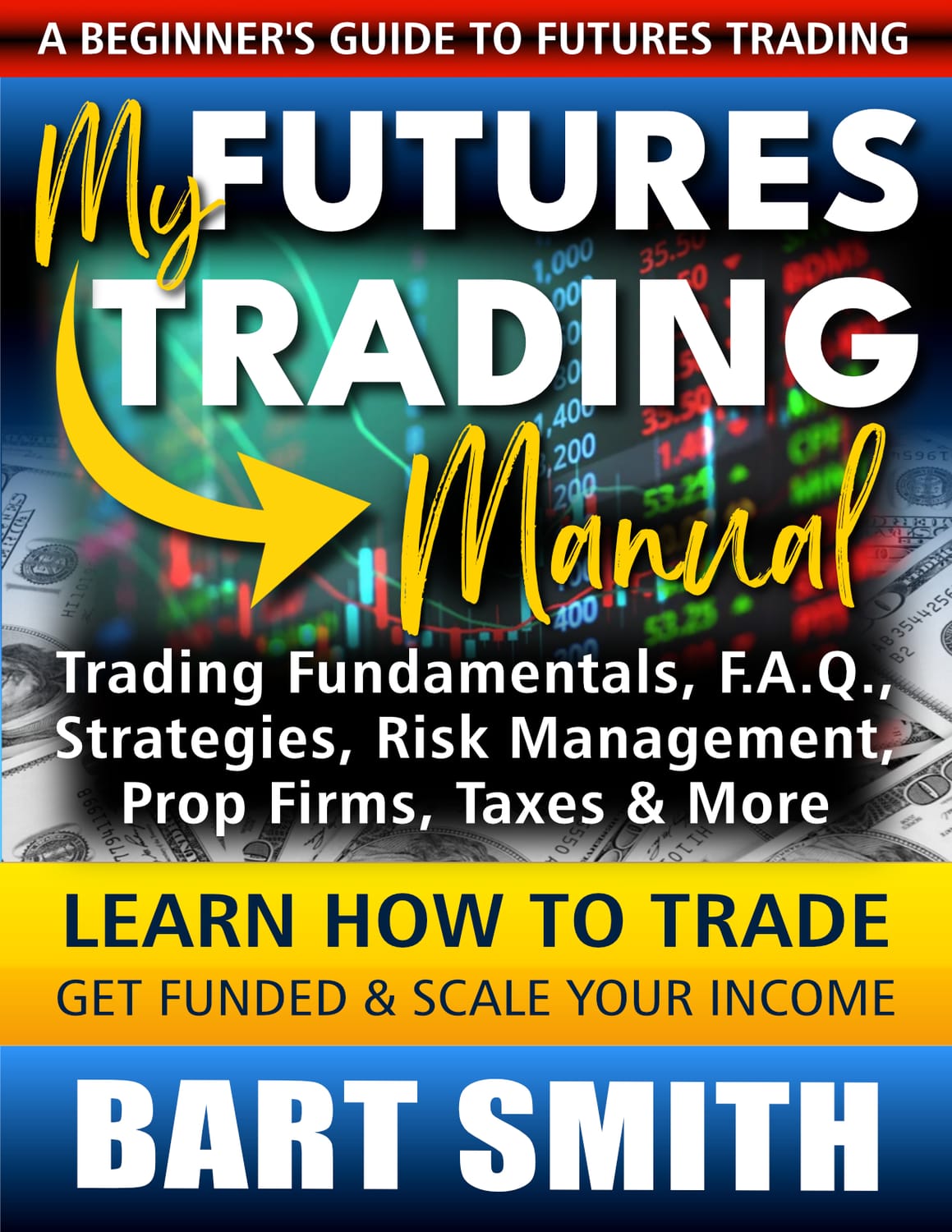
If you liked this article, check out my book, My Futures Trading Manual, where I've organized my research, notes, beginner questions, trading fundamentals, strategies, risk management information, and prop firm resources into one easy-to-read, full-color educational manual. Learn from my notes, avoid unnecessary mistakes, and join me on the journey as we continue learning about futures trading together!
(THIS CONTINUES IN THE BOOK)
# # #
WOULD YOU LIKE TO:
RETURN TO THE:
WOULD YOU LIKE TO:

Website Design by Bart Smith
© Bart Smith | All Rights Reserved