BART SMITH OFFICIAL WEBSITE • AUTHOR • YOUTUBER • COOKIE BAKER • COOKBOOK CHEF • FUTURES TRADER


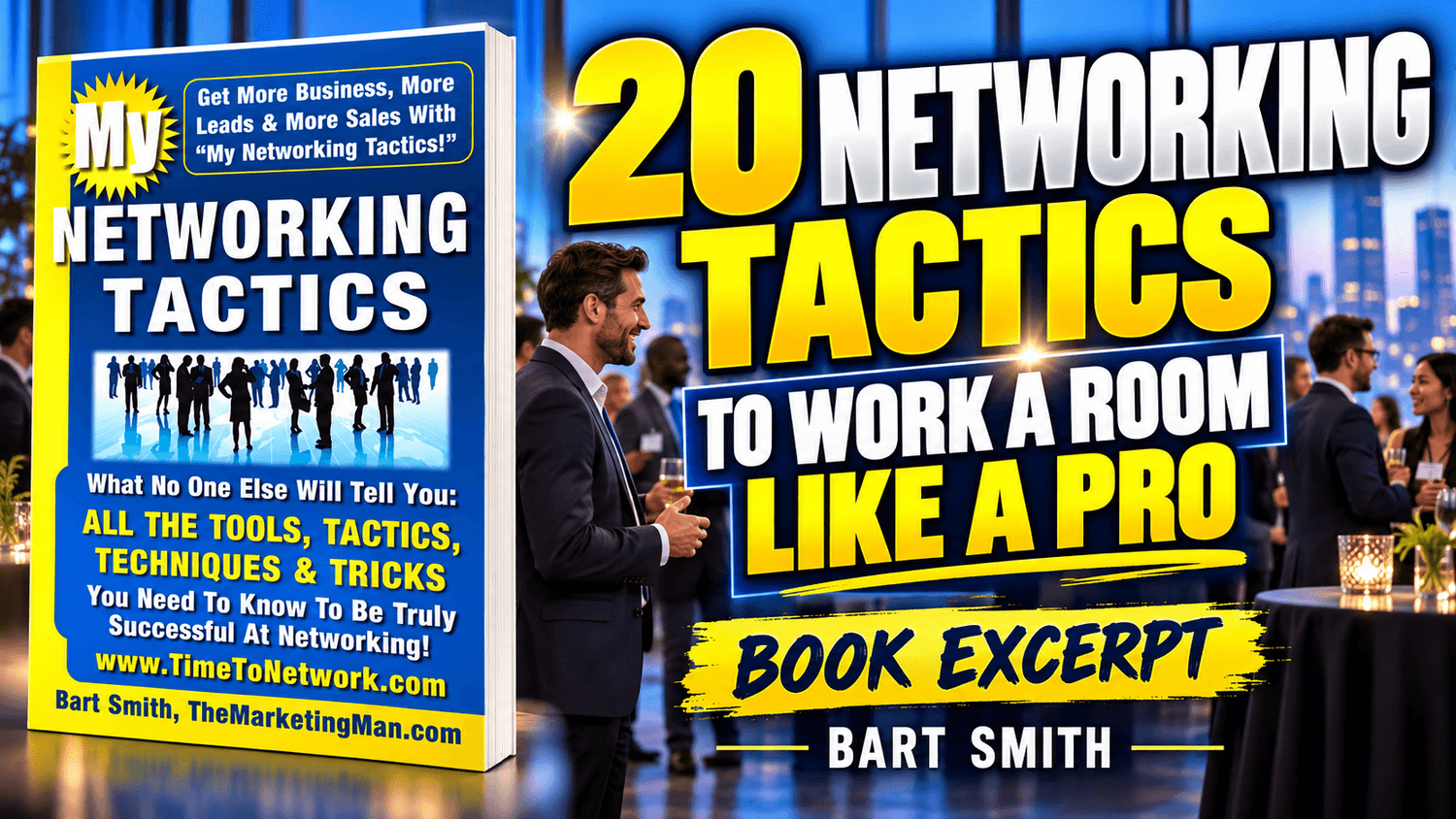
BOOK EXCERPT
📖 20 Networking Tactics To Work A Room Like A Pro
Excerpted and adapted from My Networking Tactics book by Bart Smith
Reprinted by Permission
Working a room well is not about collecting the most business cards or talking the loudest. It is about preparing before you arrive, making strong first impressions, asking good questions, listening carefully, helping people connect and knowing when to move on.
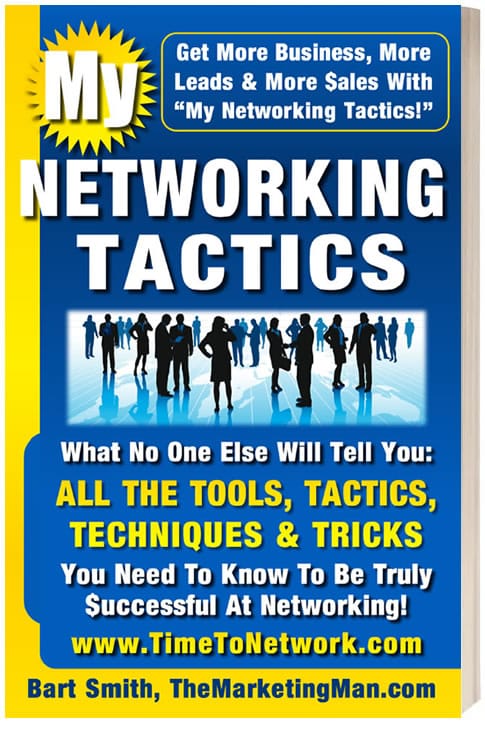
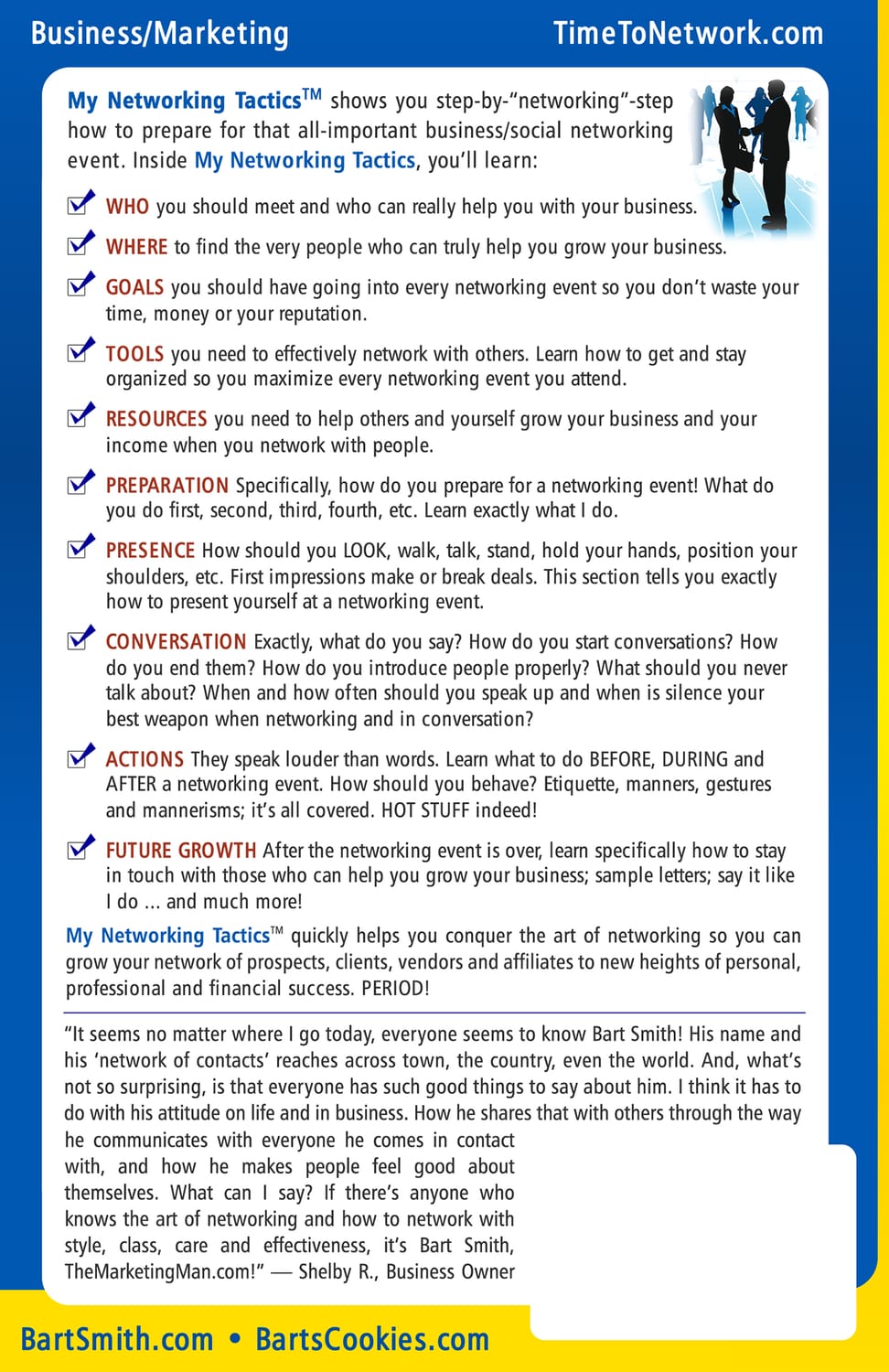
My Networking Tactics is built around ten core networking components, including preparation, presence, conversation, actions and future growth. The following tactics pull those ideas together into a practical way to work a room with purpose.
Use these 20 tactics at your next networking event:
1. Know Why You Are There
Set a goal before you walk into the room. Are you looking for clients, vendors, affiliates, speaking opportunities, media contacts, referrals, joint venture partners or simply stronger business relationships? A clear goal keeps you focused.
2. Research The Event Beforehand
Study the organization, host company, speakers, sponsors and likely attendees. Look at the event website, social pages, press room and videos so you arrive with useful context and conversation starters.
3. Know Who You Want To Meet
Make a short list of the kinds of people who could help with your current business needs. You do not need to know every name in advance, but you should know the types of contacts you want to find.
4. Prepare A Short Introduction
Have a concise 15-to-30-second introduction that explains who you are, what you do and whom you help. Keep it short enough to invite questions instead of turning it into a speech.
5. Bring The Right Tools
Carry business cards or an easy digital contact method, a pen, your phone and any appropriate brochures, books, samples or media materials. Bring only what helps the conversation rather than hauling your entire office.
6. Arrive Ready To Make A Strong First Impression
Dress appropriately, look organized and walk in with good posture, eye contact and energy. Presence matters because people begin forming an impression before you say much.
7. Introduce Yourself To The Host
If possible, meet the organizer, facilitator or event contact early. Thank them for hosting and let them know you are glad to be there. That one relationship can lead to introductions throughout the room.
8. Start With Easy Questions
A simple 'What do you do?' or 'How did you hear about tonight's event?' can open a conversation without pressure. Good networking begins with curiosity.
9. Listen More Than You Talk
Use the 80/20 approach: listen roughly 80 percent of the time and speak about 20 percent. You already know your own story. Spend the event learning who everyone else is.
10. Ask What They Need
One of the most useful questions is, 'What do you need the most help with?' Their answer may reveal a way you can help directly or connect them with someone else.
11. Look For Ways To Help First
Think about what you can do for the person before worrying about what they can do for you. Helping others is one of the fastest ways to become memorable and useful.
12. Be A Connector
Introduce people who may benefit from knowing each other. A strategic introduction can create value even when you are not directly involved in the opportunity.
13. Keep Your Own Story Short
If the other person asks about you, give a brief, relevant answer. Networking events are for opening conversations, not delivering 20-minute presentations.
14. Exchange Contact Information With Purpose
When there is a reason to stay connected, trade cards or contact information and make a quick note about what you discussed so you remember why you wanted to follow up.
15. Ask Permission To Follow Up
Instead of saying, 'We should talk sometime,' ask whether it is okay to call or email and, when appropriate, agree on a general day or time. Make the next step real.
16. Manage Your Time
If the room is full of people, do not spend the entire event with one person. Wrap up politely and keep moving so you have time to meet other potentially valuable contacts.
17. Take Useful Photos
With permission, take photos with the host, speaker, organizer or people you meet. These can document your activity, strengthen your website or press room and remind you later who you met.
18. Watch For Unexpected Opportunities
You may meet someone outside your original target list who can introduce you to exactly the person you need. Treat people with respect because you never know where a relationship may lead.
19. Know When To Stay And When To Leave
Sometimes the last few minutes of an event create excellent conversations because the room is quieter. Other times, an event simply is not producing value. Pay attention to your return on time and money.
20. Leave With A Follow-Up Plan
Before you walk out, know which contacts you want to call, email, thank, introduce to someone else or schedule time with. The event is only the beginning; what you do afterward is what turns contacts into relationships.
FINAL THOUGHT
The best networkers do not dominate a room. They make the room work better. They ask, listen, connect, help, remember names and follow through.
Work the room with purpose, but make the people in it feel like the priority.
(THIS CONTINUES IN THE BOOK)
# # #
WOULD YOU LIKE TO:
RETURN TO THE:
WOULD YOU LIKE TO:

Website Design by Bart Smith
© Bart Smith | All Rights Reserved