BART SMITH OFFICIAL WEBSITE • AUTHOR • YOUTUBER • COOKIE BAKER • COOKBOOK CHEF • FUTURES TRADER


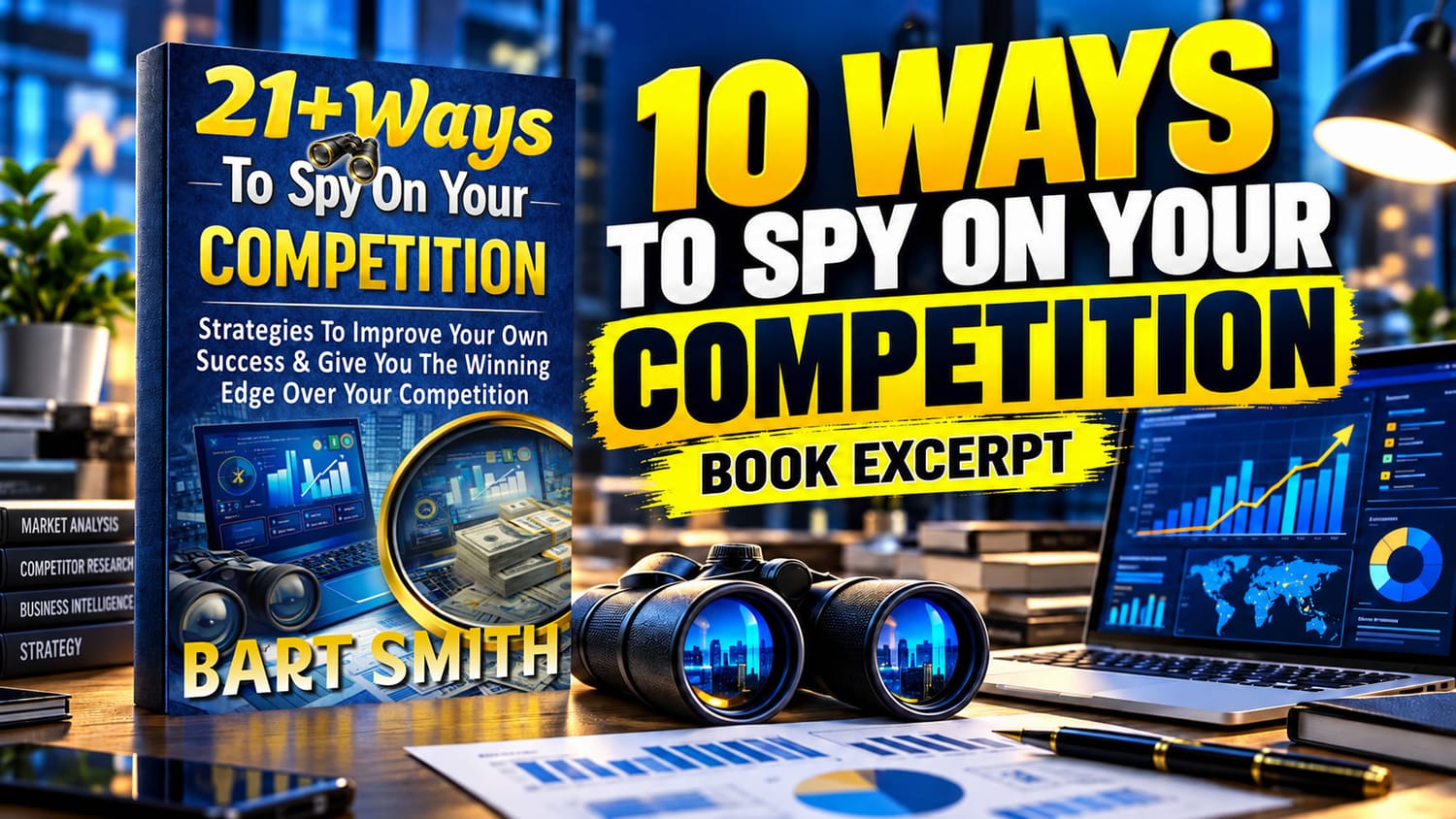
BOOK EXCERPT
📖 10 Ways To Spy On Your Competition
Excerpted and adapted from 21+ Ways To Spy On Your Competition book by Bart Smith
Reprinted by Permission
If you are in business, you are already competing whether you think about it every day or not. The smartest thing you can do is pay attention.
Spying on your competition, done ethically, is not about sabotage, theft or paranoia. It is about observation. Your competitors are constantly testing ideas, launching offers, adjusting prices, creating content, refining sales systems and learning what works. When you study what they do, you can shorten your own learning curve and make better decisions with more context.
Here are 10 practical ways to study your competition without giving away every spying secret in the book:
1. Study Their Website
Start with their digital headquarters. Review the home page, About page, product and service pages, pricing, testimonials, contact page, media room, blog, resources, calls-to-action, navigation, branding, layout and overall flow. Pay attention to what is there, what is missing and what they clearly want visitors to do next.
2. Read Their Blog
Blog content reveals what your competitors want to be known for. Study the subjects they write about, how often they publish, which topics receive comments or engagement, and what questions readers ask. Their content can reveal both strengths and gaps.

3. Subscribe To Their Email List
Email gives you a front-row seat to their marketing. Watch what they send, how often they send it, what subject lines they use, what they promote repeatedly and how they move subscribers from free content toward offers.
4. Study Their Products, Services & Pricing
Look at what they sell, how they package it, what they charge, what bonuses they include, whether they offer bundles, subscriptions, upsells, guarantees or different service levels. Pricing and packaging reveal a lot about how they position themselves.
5. Review Their Books, Courses & Audiobooks
Long-form products show how competitors organize their ideas, teach their audience and position their expertise. Look for recurring themes, frameworks, examples, offers and areas they cover well - as well as areas they barely address.
6. Study Their Sales Process
Pay attention to how they move people from interest to purchase. What happens after someone clicks a button, downloads a resource, books a call or joins a webinar? Notice the sequence, messaging, follow-up, offers and calls-to-action.
7. Read Their Testimonials & Reviews
Testimonials show what customers value most. Reviews - especially negative ones - show where people are frustrated. Together, they reveal the promises customers care about and the standards you may need to meet or exceed.
8. Join Their Public Communities
Forums, Discord groups, Facebook groups and other communities can reveal the questions customers ask, the problems they struggle with and the subjects that generate the most interest. Listen carefully before drawing conclusions.
9. Study Their Social Media Activity
Watch what they post, how often they post, which platforms they emphasize, what formats they use and which topics generate visible engagement. Repetition often signals what they believe is working.
10. Study Their Social Media Statistics
Go beyond individual posts and look for trends. Follower growth, video views, posting frequency, engagement and audience sentiment can help you understand momentum. The goal is not to obsess over vanity numbers but to turn observation into useful intelligence.

WHAT ARE YOU REALLY LOOKING FOR?
You are looking for ideas, systems, positioning, strengths, weaknesses, patterns and gaps. What are they doing repeatedly? What seems to be working? What are customers praising? What are customers complaining about? What do they make easy? What do they make difficult? What do they ignore? Do not copy blindly. Observe intelligently. Take notes. Adapt the lessons to your own business. The goal is not to become your competition. The goal is to become better because you paid attention.
(THIS CONTINUES IN THE BOOK)
# # #
WOULD YOU LIKE TO:
RETURN TO THE:
WOULD YOU LIKE TO:

Website Design by Bart Smith
© Bart Smith | All Rights Reserved