BART SMITH OFFICIAL WEBSITE • AUTHOR • YOUTUBER • COOKIE BAKER • COOKBOOK CHEF • FUTURES TRADER


BOOK EXCERPT
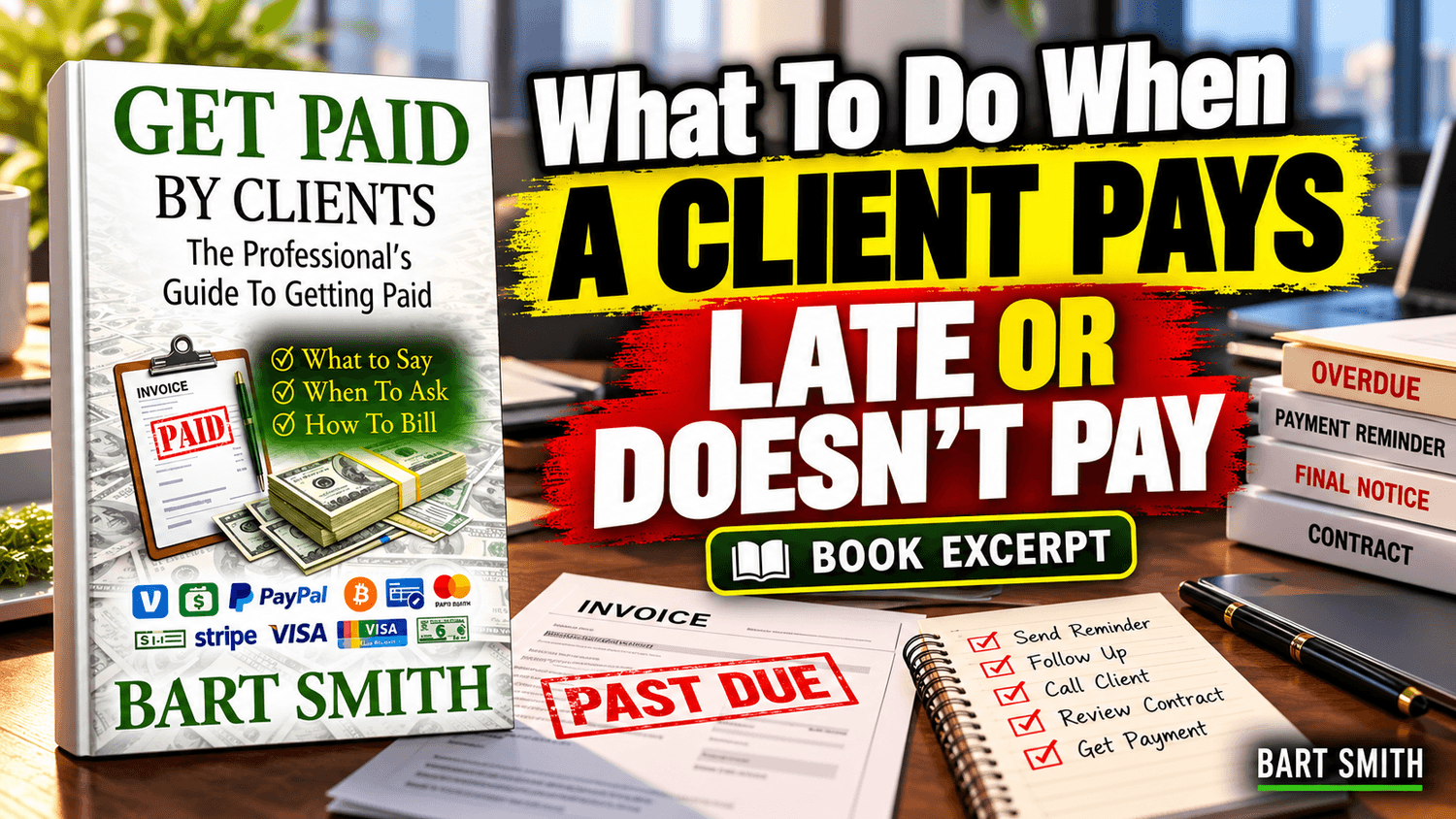
📖 What To Do When A Client Pays Late Or Doesn't Pay
Excerpted and adapted from Get Paid By Clients book by Bart Smith
Reprinted by Permission
Late payments happen in business, but they should not turn into panic, anger or endless chasing. The best response is calm, documented and structured. You want to protect the relationship when possible while also protecting your cash flow and your right to be paid.
1. Check the invoice first and make sure the amount, due date, payment link and client information are correct.
2. Send a short, neutral reminder as soon as the invoice becomes overdue.
3. Keep emotion out of the message; your goal is payment, not an argument.
4. Refer back to the payment terms the client already agreed to.
5. Ask whether anything is needed from your side to help accounting process the payment.
6. Use automated invoice reminders so follow-up happens consistently.
7. Pause additional work if the client remains overdue and your agreement allows it.
8. Do not keep increasing your unpaid exposure by continuing to work indefinitely without payment.
9. For appropriate projects, hold final files, ownership or delivery until the agreed balance is paid.
10. If a good client has a temporary cash-flow problem, consider a structured payment schedule instead of reducing your fee.
11. Apply late fees only when they were agreed to in advance and are legally appropriate.
12. Keep copies of contracts, invoices, emails, reminders, payment promises and completed work.
13. Watch for patterns such as chronic late payment, refusal to pay agreed rates or repeated excuses.
14. If the payment problem continues, consider ending the relationship professionally and according to your agreement.
15. Use every late-payment experience to improve your future systems: stronger deposits, clearer due dates, milestone billing and better invoicing procedures.
FINAL THOUGHT
A late invoice is a signal to use your system. Remind, document, enforce the agreement and stay professional. The strongest payment strategy is to build enough structure into the relationship that late payment becomes less likely in the first place.
(THIS CONTINUES IN THE BOOK)
# # #
WOULD YOU LIKE TO:
RETURN TO THE:
WOULD YOU LIKE TO:

Website Design by Bart Smith
© Bart Smith | All Rights Reserved