BART SMITH OFFICIAL WEBSITE • AUTHOR • YOUTUBER • COOKIE BAKER • COOKBOOK CHEF • FUTURES TRADER


BOOK EXCERPT
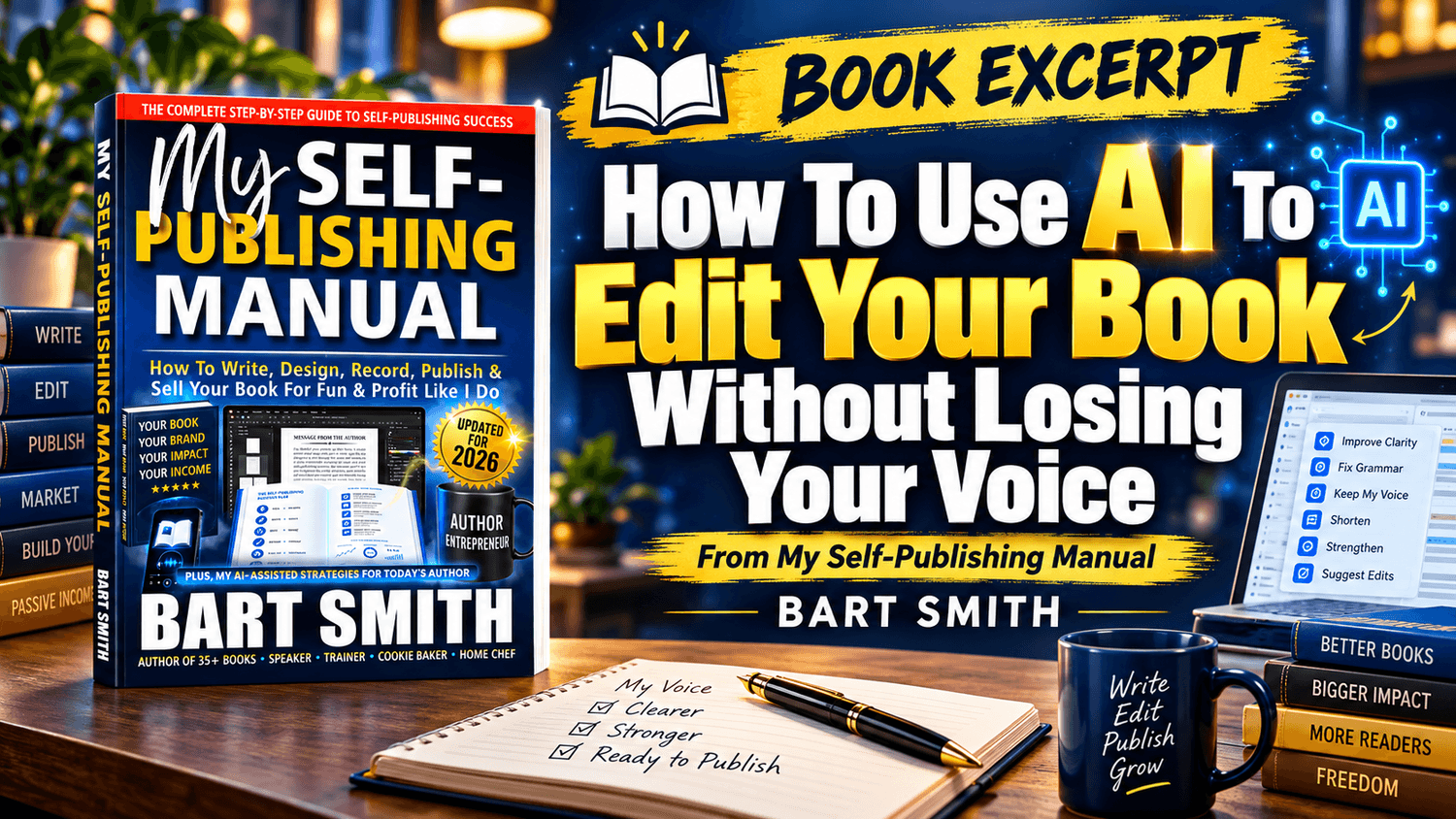
How To Use AI To Edit Your Book Without Losing Your Voice
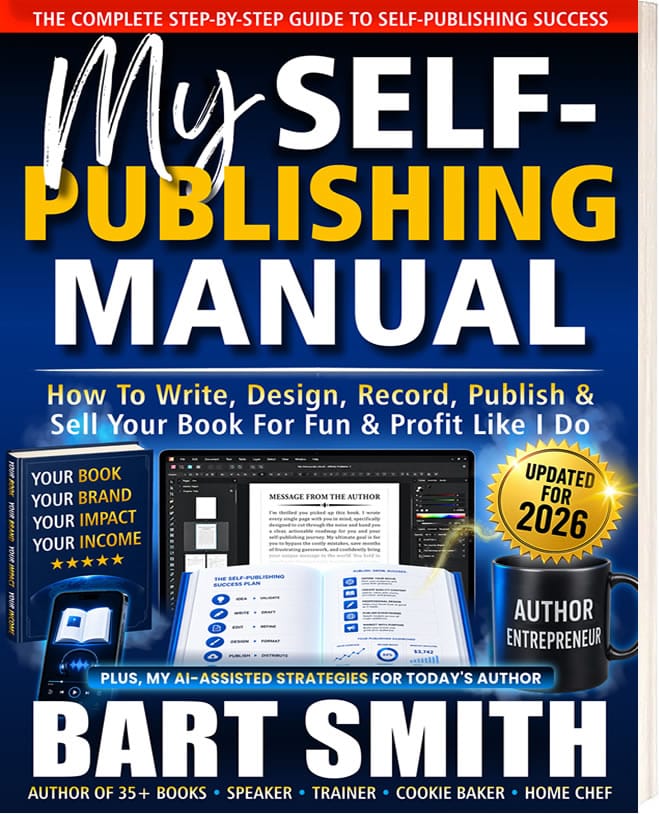
Excerpted and adapted from My Self-Publishing Manual by Bart Smith
Reprinted by Permission
Finishing the first draft is a huge accomplishment, but a rough manuscript is not yet a finished book. Editing is what turns a collection of ideas into something readers can follow, understand and enjoy.
Today, I like a simple three-layer editing approach: your own review, AI-assisted editing and human feedback. Each layer catches different things, and together they can help you produce a much cleaner manuscript.
Layer #1: Self-Edit As You Go
Do not wait until the very end before you start cleaning things up. If a sentence sounds awkward, smooth it out. If a paragraph is too long, tighten it. If something clearly does not belong, remove it or mark it for later.
This does not mean you should obsess over every line while drafting. It means you should avoid leaving an enormous pile of obvious mistakes for the very end.
Use the spelling and grammar tools inside Word or Google Docs. Look for repeated words, confusing sentences and sections where your point is not as clear as it could be.
Layer #2: Use AI As An Editing Assistant
AI can be extremely useful for cleaning up a manuscript when you use it as an assistant rather than handing over control of your book. You can ask AI to help you:
Fix grammar and spelling.
Tighten and simplify your writing.
Improve clarity and readability.
Smooth transitions between sections.
Reduce word or sentence count.
Expand sections that feel too thin.
Rewrite a rough passage in your tone.
Catch repetition and redundancy.
Turn rough notes into cleaner content.
Give a final polish to a completed section.
When To Lean On AI For Help
1. When You Know What You Want To Say, But Cannot Find The Words — Write something — even if it is rough — and ask AI to help phrase the idea more clearly. Then adjust the result until it sounds like you.
2. When A Chapter Feels Off — If you cannot identify why a section feels weak, ask AI what is unclear, repetitive or missing. It may help you see structural or flow problems you have become too close to notice.
3. When The Writing Is Too Long — Ask AI to reduce a section by a specific percentage or remove repetition without changing the meaning. Then review the shorter version carefully.
4. When The Writing Sounds Robotic — If repeated editing has made a passage stiff, ask AI to rewrite it in a conversational tone, as if you are speaking to one person.
5. When Transitions Feel Choppy — Ask AI to suggest a smooth bridge between two sections. A single transition sentence can dramatically improve readability.
6. When You Need An Introduction Or Wrap-Up — Give AI the key points from a section and ask for a short opening or closing paragraph. Then customize it to match your voice.
7. When You Finish A Chapter — Run the chapter through AI for a quick clarity, grammar and flow review before moving on.
8. Before You Publish — Use AI as another safety net to spot awkward phrasing, repetition and simple errors before the manuscript reaches its final stage.
Layer #3: Work With A Human Editor
Even with AI, human feedback still matters. A good editor can spot problems with logic, tone, structure and reader experience that automated tools may miss.
One advantage of cleaning your manuscript before it reaches an editor is that the editor can spend more time on quality rather than correcting easy mistakes you could have fixed yourself.
When choosing an editor, look at their experience, feedback and editing style. Ask for a sample edit when possible. And remember: it is still YOUR book. Review every major change and keep what matches your voice and message.
Do Not Skip The Physical Proof
No matter how much editing you do on a screen, seeing the book in print changes the way you read it. A physical proof forces you to slow down. Awkward spacing, missing words, bad breaks and little mistakes often become easier to see on paper.
AI can make editing faster. Human editors can make it stronger. But neither replaces your judgment. The best final manuscript is the one where technology helps you work faster without erasing the personality that made the book yours in the first place.
(THIS CONTINUES IN THE BOOK)
# # #
WOULD YOU LIKE TO:
RETURN TO THE:
WOULD YOU LIKE TO:

Website Design by Bart Smith
© Bart Smith | All Rights Reserved