BART SMITH OFFICIAL WEBSITE • AUTHOR • YOUTUBER • COOKIE BAKER • COOKBOOK CHEF • FUTURES TRADER



BOOK EXCERPT
📖 How To Structure A Successful Joint Venture
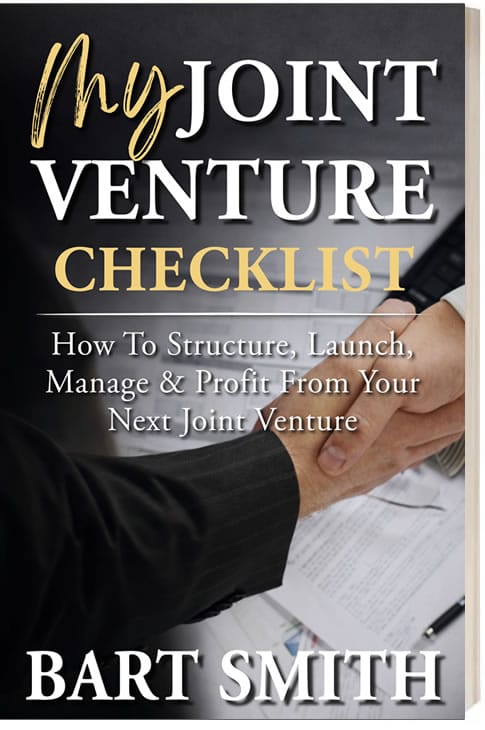
Excerpted and adapted from My Joint Venture Checklist book by Bart Smith
Reprinted by Permission
A joint venture becomes much easier to manage when the structure is clear before the launch begins.
Good intentions are not enough. Two smart people can still create confusion if nobody knows who owns the offer, who sends the emails, who pays the expenses, who handles refunds or how profits are calculated. Structure removes ambiguity.
Here is a practical framework for building a successful joint venture:
1. Define The Objective
Start with the reason the joint venture exists. Decide whether the primary goal is revenue, audience growth, market expansion, product creation, brand exposure, lead generation or a longer-term strategic alliance.
2. Choose The Right Partner
Complete due diligence before moving forward. Confirm audience alignment, reputation, operational ability, financial integrity, communication style and shared values.
3. Define The Exact Offer
Clarify what you are promoting or creating. Decide whether this is a promotional JV, a co-created product, a bundle, workshop, course, event, mastermind, service or recurring offer.
4. Validate The Opportunity
Before investing heavily, look for evidence of demand. Surveys, pre-launch emails, deposits, pilot programs and smaller beta launches can reduce risk.
5. Define Roles & Responsibilities
Write down who is responsible for product creation, marketing, copy, technology, support, fulfillment, reporting, approvals and customer communication.
6. Set The Timeline
Determine the launch date, promotional window, milestones, deadlines and review dates. Short-term and long-term ventures require different levels of structure.
7. Set Pricing & Revenue Model
Agree on price, one-time versus recurring revenue, upsells, backend opportunities, payment processing and how discounts or promotions will be handled.
8. Define The Profit Split
Document the percentage or commission each party receives, which expenses come out first, payout dates, refund adjustments and who has access to reporting.
9. Clarify Ownership
Determine who owns intellectual property, customer data, creative assets, trademarks, recordings, course materials and other assets created during the partnership.
10. Build Financial Controls
Track revenue, expenses, refunds, chargebacks and payouts transparently. Both parties should understand how the numbers are calculated.
11. Build The Marketing Plan
Align email sequences, sales pages, social media, webinars, ads, affiliate links, launch dates and cross-promotional activity. Coordinated promotion improves execution.
12. Prepare Customer Support
Decide who handles questions, complaints, refunds, technical issues and service delivery. A poor customer experience can damage both brands.
13. Test The Systems
Before launch, test checkout pages, payment processing, tracking links, emails, forms, access systems, automations and analytics. Preparation prevents avoidable launch-day problems.
14. Create A Written Agreement
Formalize roles, responsibilities, financial terms, ownership, confidentiality, termination rights, dispute resolution and any exclusivity or non-compete terms. Significant ventures should be professionally reviewed.
15. Agree On Communication
Set meeting frequency, reporting expectations, response times and approval processes. Good communication prevents small problems from becoming personal conflicts.
16. Track Performance
Monitor sales, leads, conversions, refunds, engagement, customer response and other agreed metrics during the campaign.
17. Review The Results
After the launch, reconcile revenue and expenses, issue payouts and meet to discuss what worked, what did not and what should change next time.
18. Plan The Future
Decide whether to renew, scale, restructure or sunset the venture. Explore backend offers, recurring opportunities, cross-promotions and additional collaborations if the partnership performed well.
THE SIMPLE RULE
The stronger the preparation, the smoother the execution. Structure, planning and transparency protect profit. Clarity protects reputation. Preparation protects relationships. When the deal is built correctly, a joint venture can help both partners move faster and create opportunities neither could have produced as easily alone.
(THIS CONTINUES IN THE BOOK)
# # #
WOULD YOU LIKE TO:
RETURN TO THE:
WOULD YOU LIKE TO:

Website Design by Bart Smith
© Bart Smith | All Rights Reserved