BART SMITH OFFICIAL WEBSITE • AUTHOR • YOUTUBER • COOKIE BAKER • COOKBOOK CHEF • FUTURES TRADER


BOOK EXCERPT
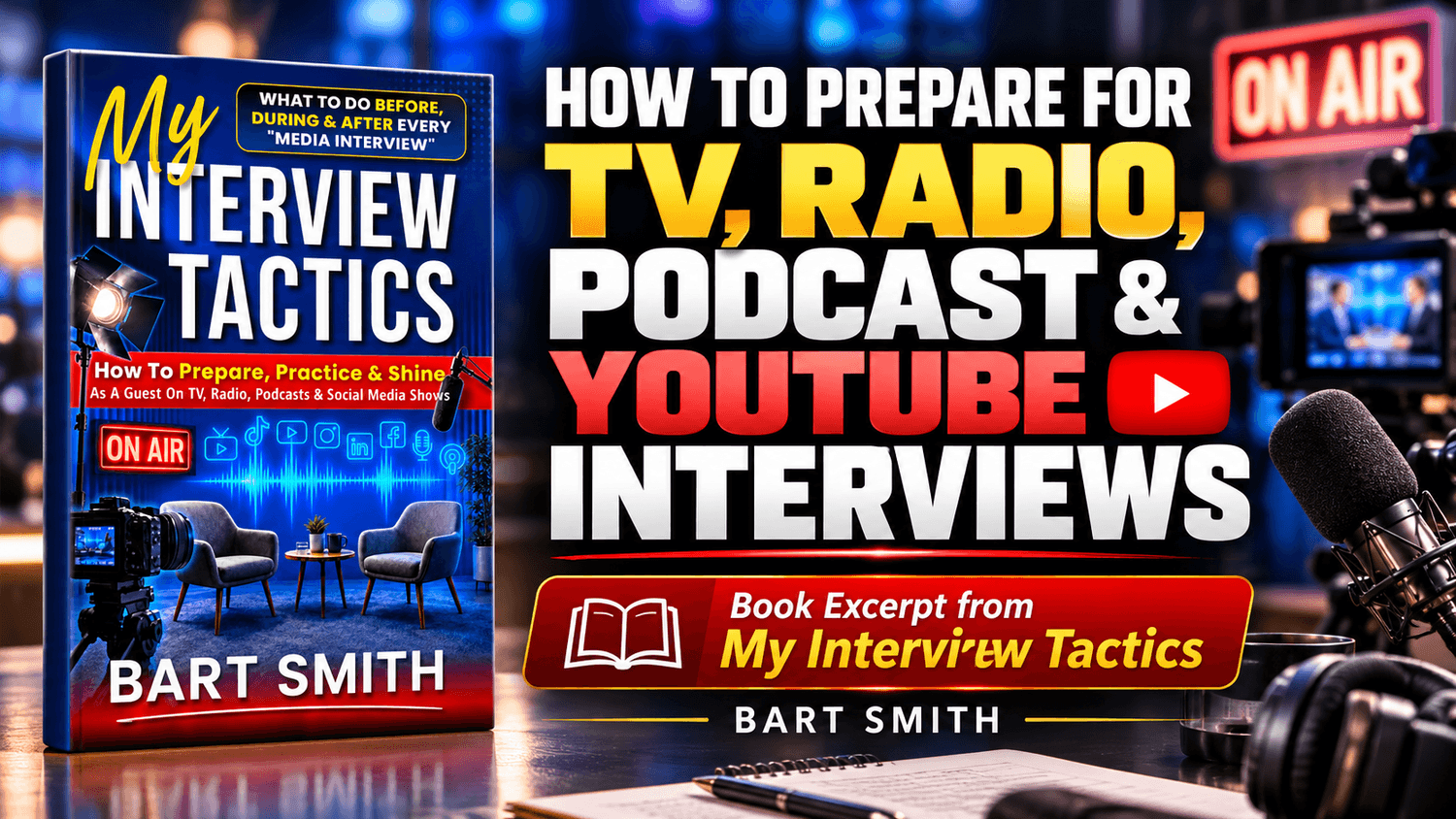
📖 How To Prepare For TV, Radio, Podcast & YouTube Interviews
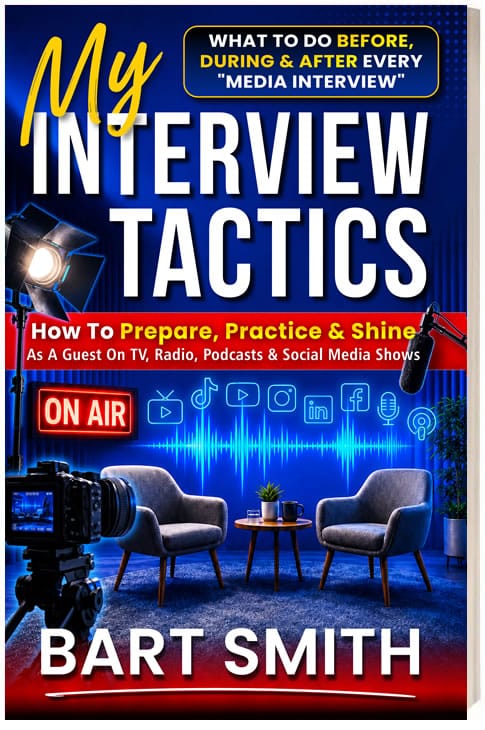
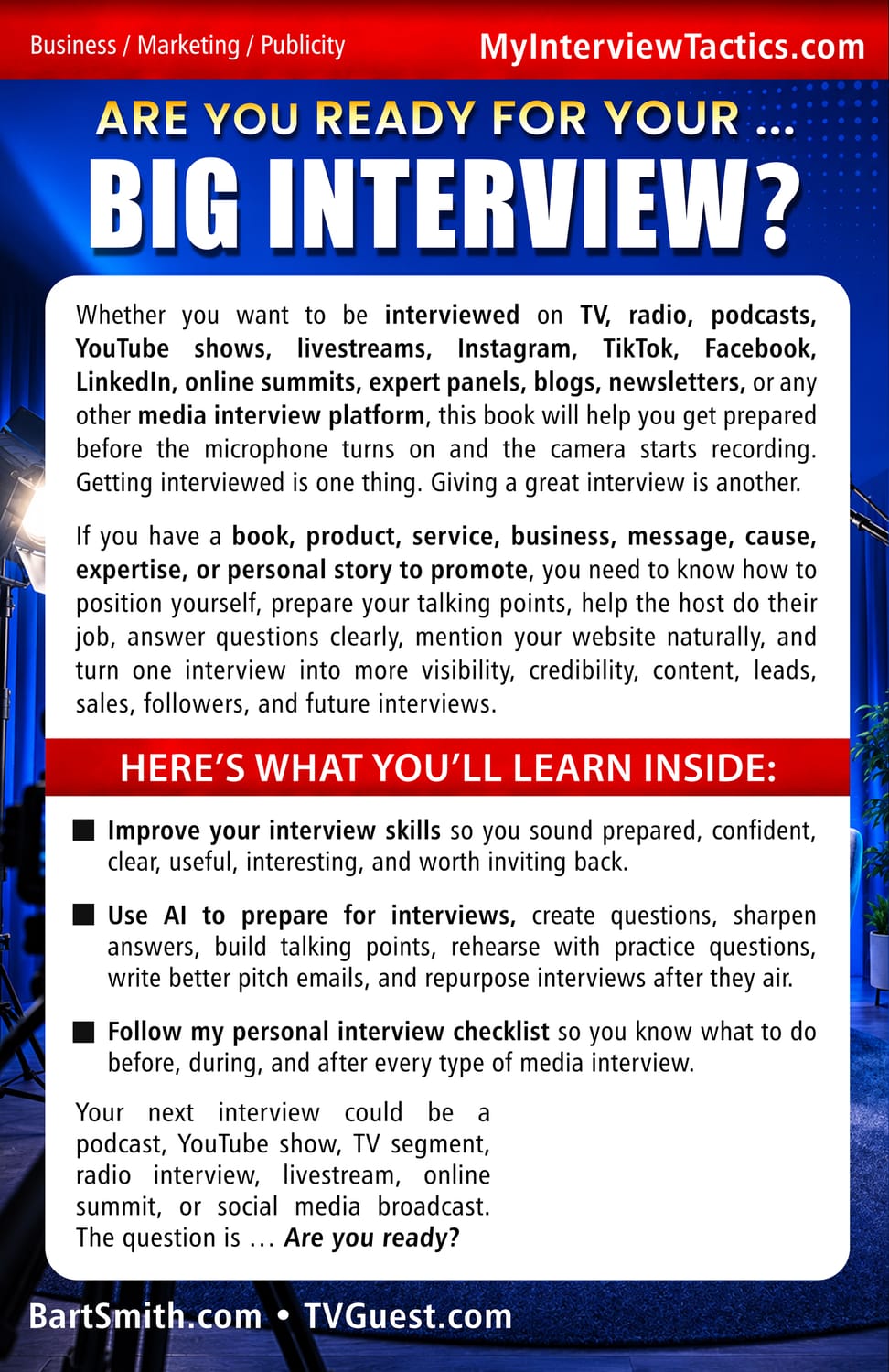
Excerpted and adapted from My Interview Tactics book by Bart Smith.
Reprinted by Permission
Today, interviews happen everywhere: television, radio, podcasts, YouTube shows, livestreams, webinars, virtual summits and social media platforms.
The format may change, but the preparation principles are remarkably similar. You want to know your message, understand the audience, anticipate likely questions, prepare your stories and make it easy for people to learn more about you after the interview.
Use the following preparation process before your next appearance:
1. Know Why You Are Doing The Interview
Decide what you want the interview to accomplish. Are you promoting a book, building credibility, attracting clients, sharing a story, supporting a cause or introducing a product? Your goal should shape your message.
2. Research The Show And Host
Watch or listen to several past episodes. Learn the tone, length, audience, style and types of questions the host usually asks. The more you know about the show, the easier it is to fit the conversation.
3. Know The Audience
Ask yourself who will be listening or watching and what they care about. Tailor your examples and language to the people the show already serves.
4. Define Your Main Message
Know the central idea you want the audience to remember. You can discuss many points during an interview, but they should support one clear overall message.
5. Prepare Your Talking Points
Write down the major ideas, stories, examples, warnings, lessons or steps you want to discuss. Keep them easy to scan so you can review them quickly before the interview.
6. Prepare Suggested Questions
Create 10 to 20 questions you would be comfortable answering. Place them on your Interview Me page or in a document for the host. Suggested questions help the host while also giving you a valuable rehearsal guide.
7. Practice Your Answers At Different Lengths
Try answering common questions in 30 seconds, 60 seconds and two minutes. TV often rewards concise answers, while podcasts and livestreams may allow longer stories.
8. Prepare Your Best Stories And Examples
Stories make your ideas easier to remember. Choose several examples that demonstrate your message without taking forever to tell.
9. Know Your Call-To-Action
Decide where listeners or viewers should go after the interview. Your website, book page, newsletter, calendar or special resource should be easy to say and easy to remember.
10. Prepare Your Online Presence
Make sure your website, Interview Me page, media room, bio, photos, sample interviews, book page, contact information and important links are current and working.
11. Prepare Your Materials
If you are discussing a book, keep an interview copy nearby with tabs, highlights and notes marking key stories and sections. Have any product images, logos or supporting materials ready if the host requests them.
12. Prepare Your Appearance
For video, think about clothing, grooming, posture, lighting, framing and background. Your visual presentation should support your credibility rather than distract from it.
13. Test Your Technology
For remote appearances, test the camera, microphone, Internet connection, lighting and platform before the interview. Close distractions and silence unnecessary devices.
14. Prepare Your Environment
Choose a quiet space. Have water nearby. Make sure pets, phones, alerts, background noise and interruptions are handled before the interview begins.
15. Prepare To Help The Host
Remember that your job is not only to promote yourself. Your job is to help the host create a useful, interesting interview for the audience. Be responsive, cooperative and easy to work with.
MATCH YOUR STYLE TO THE FORMAT
TV usually rewards short, clear answers and strong visual presence. Radio requires your voice, pacing and stories to carry more of the experience. Podcasts often allow longer explanations and deeper conversations. YouTube and livestream interviews may blend education, personality, visuals and audience interaction. The better you know your material, the easier it becomes to adjust naturally to each format.
FINAL THOUGHT
Preparation creates confidence. Confidence improves performance. Better performance makes hosts, producers and audiences more likely to remember you.
Do the work before the interview so you can enjoy the conversation when the microphone or camera turns on.
(THIS CONTINUES IN THE BOOK)
# # #
WOULD YOU LIKE TO:
RETURN TO THE:
WOULD YOU LIKE TO:

Website Design by Bart Smith
© Bart Smith | All Rights Reserved