BART SMITH OFFICIAL WEBSITE • AUTHOR • YOUTUBER • COOKIE BAKER • COOKBOOK CHEF • FUTURES TRADER


BOOK EXCERPT
How To Choose A Book Title, Subtitle & Cover That Sell The Idea
Excerpted and adapted from My Self-Publishing Manual by Bart Smith
Reprinted by Permission
Once you know WHY you are writing your book and what TYPE of book you want to create, it is time to start shaping how the book will be presented to the world. Your title, subtitle and front cover work together. They should quickly tell a potential reader what the book is about, why it matters and why they should stop long enough to take a closer look.
Book Title Guidelines To Keep In Mind
1. Clearly Describe The Subject — Especially with non-fiction, readers should not have to study your table of contents just to figure out what your book is about. Avoid titles that are so vague or clever that the value gets lost.
2. Keep It Short — I generally like book titles that are five words or fewer. Short titles are easier to remember, easier to say during interviews and easier to fit into cover designs.
3. Make It Memorable — Aim for wording that sticks in someone’s mind after they put the book down. A title should be easy to repeat and easy to remember.
4. Make It Easy To Read — Your title needs to work on a bookshelf, on a website and as a tiny online thumbnail. Use clear wording and a visual presentation that can be understood quickly.
5. Research The Competition — Search books in your field and study how other titles are positioned. You want to understand the market, spot patterns and avoid creating something that looks like a copy of everything else.
6. Search Amazon Before You Commit — Look up your proposed title on Amazon. If several books already use the same or nearly identical wording, consider modifying yours so it stands apart.
7. Check The Domain Name — If the matching .com is available, consider securing it early. A memorable book-title domain gives you a clean destination for marketing and makes interviews easier because you can simply tell people where to go.
8. Apply The Recall Test — Say the title to someone who has never heard it before. Ten minutes later, ask if they remember it. If they cannot remember it, spell it or repeat it easily, you may be making the title too complicated.
Let The Subtitle Do The Heavy Lifting
Your main title is the hook. Your subtitle explains the promise. A strong subtitle tells the reader what they will learn, solve, avoid, improve or achieve. It also gives you room to include useful keywords without turning the main title into a mouthful.
For example, a short title might create curiosity while the subtitle explains the specific result or blueprint inside the book. In many cases, the subtitle is where you sell the practical value. You can even use more than one subtitle or supporting line when the design allows it. The key is to make sure every extra line adds clarity rather than clutter.
Your Cover Is Packaging, Positioning & Salesmanship
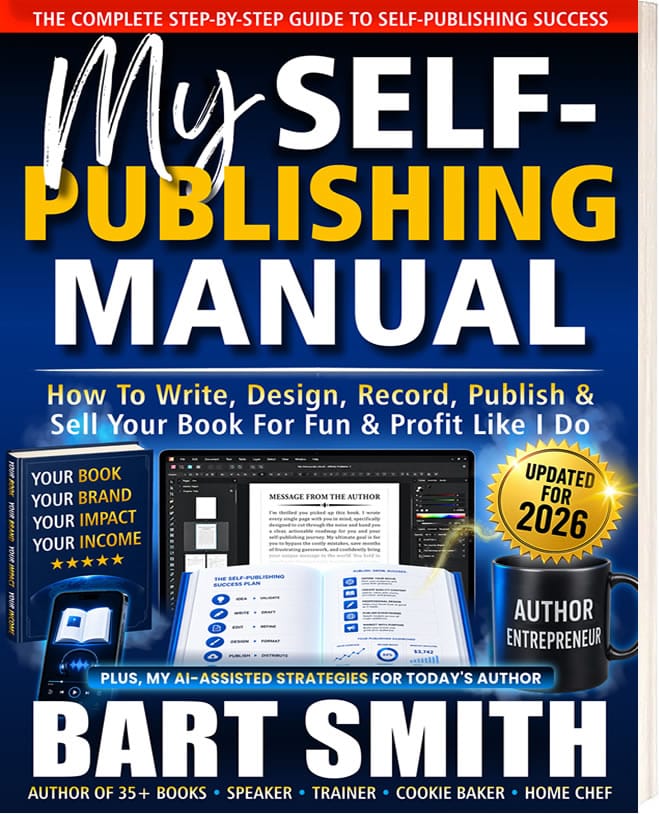
People may tell you not to judge a book by its cover, but readers absolutely do. Whether someone sees your book on Amazon, your website, social media, a podcast page or in your hand at an event, the front cover only has a few seconds to earn attention. When I design a front cover, I think in terms of seven basic components:
Background / Overall Look — Establish the mood with a photo, texture, pattern, gradient or visual theme that fits the subject.
Main Title — Make it big, readable and understandable even when the cover is reduced to a small thumbnail.
Main Graphic Or Image — Use a photo, illustration, person, object, symbol or visual metaphor that helps explain the book quickly.
Supporting Visual Hook — A badge, burst, icon or secondary graphic can call attention to an important selling point, but use it carefully.
Subtitle / Promise Statement — Explain the benefit, transformation or result the reader can expect.
Author Name — Put your name on the cover clearly and professionally.
Website Or Brand Line — Optional, but useful when you want readers to know where to find you after they discover the book.
Use The Cover To Motivate Yourself, Too
You do not necessarily have to wait until the manuscript is finished to visualize the front cover. Creating an early concept can make the project feel real. Seeing your title, subtitle and name on a professional-looking cover can become a powerful reminder that you are building something tangible.
The design can evolve later. Colors can change. Images can change. Wording can change. That is fine. The early cover is there to give the project identity and momentum.
The goal is simple: create a title people remember, a subtitle that explains the value and a cover that makes the right reader stop long enough to want to know more.
(THIS CONTINUES IN THE BOOK)
# # #
WOULD YOU LIKE TO:
RETURN TO THE:
WOULD YOU LIKE TO:

Website Design by Bart Smith
© Bart Smith | All Rights Reserved