BART SMITH OFFICIAL WEBSITE • AUTHOR • YOUTUBER • COOKIE BAKER • COOKBOOK CHEF • FUTURES TRADER


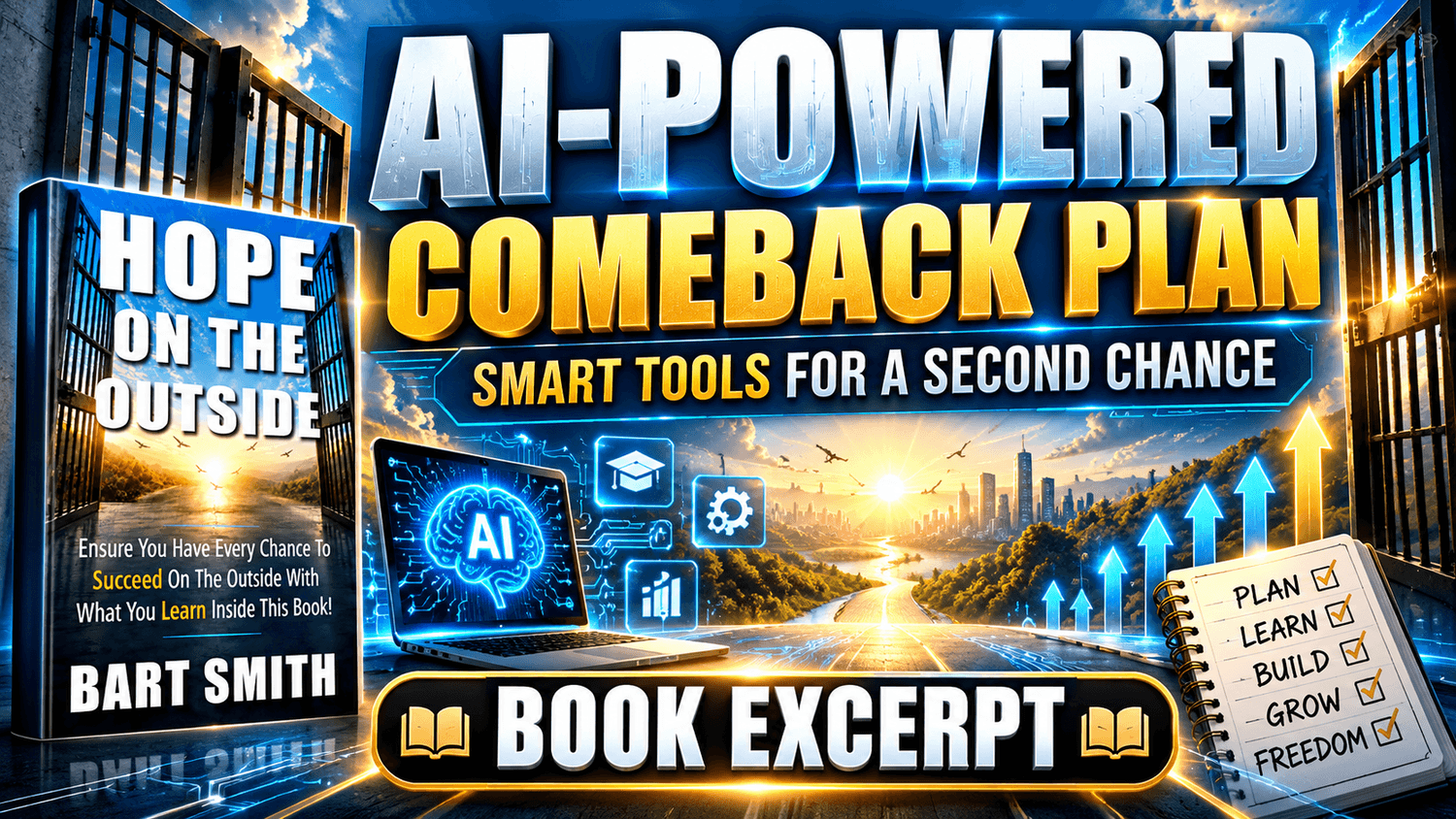
BOOK EXCERPT
📖 How AI Can Help You Rebuild Your Life After Time Spent In Prison
Excerpted and adapted from the book Hope On The Outside by Bart Smith. Reprinted by Permission.
WHAT IF YOU HAD A TOOL THAT COULD HELP YOU PLAN YOUR FUTURE, PRACTICE JOB INTERVIEWS, IMPROVE YOUR WRITING, DEVELOP NEW SKILLS, AND ORGANIZE YOUR DAILY LIFE? Now, imagine having access to that kind of assistance whenever you're trying to figure out what to do next. That's one reason I added a substantial new section to my book, Hope On The Outside, explaining how artificial intelligence, or AI, can help men and women prepare for a more productive life after incarceration. We're talking about tools such as ChatGPT, Google Gemini, Microsoft Copilot, Claude, and other AI systems that can help you organize ideas, practice important conversations, and create practical action plans.
Before anybody gets carried away, however, I want to make something perfectly clear. AI WILL NOT REBUILD YOUR LIFE FOR YOU! It won't show up at your job interview, exercise your body, keep you sober, make responsible financial decisions, or prevent you from returning to destructive habits. Nor should AI replace your lawyer, counselor, doctor, sponsor, parole officer, or anybody else responsible for providing professional assistance. What AI CAN do is help you prepare for situations before they happen, turning questions and uncertainties into written plans you can evaluate, improve, and begin putting into practice.
BUILD YOUR FIRST 30, 60 & 90 DAYS ON THE OUTSIDE
One of the most important ideas in my AI chapter involves preparing for the first several months after release. Think about all the responsibilities that may arrive simultaneously: finding housing, securing employment, attending required appointments, managing transportation, reconnecting with family, addressing health needs, and learning to handle newfound freedom responsibly. Add financial pressures, old acquaintances, emotional challenges, and possible temptations to return to former habits, and suddenly your first few weeks can become a tremendous adjustment. THAT'S WHY I RECOMMEND BUILDING YOUR PLAN BEFORE YOU NEED IT!
When you have access to an approved computer or device, you can ask an AI tool to help organize a 30-day comeback plan covering employment, exercise, recovery support, finances, daily routines, and important appointments. After reviewing that plan, you can create a 60-day version that builds upon your initial progress, followed by a 90-day plan designed to establish greater stability and independence. The objective isn't to fill your calendar with unrealistic expectations; it's to create a manageable schedule that supports your priorities. WOULDN'T YOU RATHER WAKE UP KNOWING WHAT YOU NEED TO ACCOMPLISH THAN SPEND EVERY MORNING WONDERING WHERE TO BEGIN?
USE AI TO PREPARE FOR WORK & LEARN VALUABLE SKILLS
Finding employment after incarceration can be challenging, especially when you're dealing with gaps in your work history, limited professional experience, transportation difficulties, or questions concerning your background. That's where AI may become a useful preparation tool. You can practice answering common interview questions, work on a professional résumé, organize your existing skills, and rehearse how to explain your past honestly and respectfully. You can even ask an AI system to simulate a job interview, challenge your answers, and suggest ways to communicate more clearly. THE MORE YOU PRACTICE BEFORE AN IMPORTANT CONVERSATION, THE BETTER PREPARED YOU CAN BE WHEN THAT CONVERSATION ACTUALLY HAPPENS!
AI can also help you begin learning subjects such as computer fundamentals, professional writing, customer service, sales, marketing, budgeting, and basic business operations. Perhaps you've never written a professional email, created a spreadsheet, or prepared a résumé. Instead of becoming discouraged, ask for a beginner-friendly explanation, request a practice assignment, and gradually increase the difficulty as you improve. Remember, however, that AI sometimes produces incorrect information. Verify important facts, use reputable educational materials, and seek qualified advice when decisions involve legal requirements, financial obligations, or your health.
CREATE YOUR PERSONAL STAY FREE PLAN
One of my favorite exercises in the AI chapter is what I call your PERSONAL STAY FREE PLAN. This is a written commitment to the habits, routines, responsibilities, and decisions that can help you avoid returning to the circumstances that contributed to your incarceration. It addresses who you're becoming, what behaviors you intend to avoid, how you'll respond to temptations, who you can call when you need help, and what you'll do to support your physical, emotional, and financial well-being. Your plan should also include realistic employment goals, recovery arrangements when appropriate, and ways to follow the conditions of your release.
AI can help you organize these ideas into a checklist or planning document, but don't hand over private legal records, passwords, Social Security numbers, bank details, or sensitive information about other people. Use general descriptions when requesting assistance, and remember that your written plan should always reflect your actual circumstances and requirements. THE PURPOSE IS TO HELP YOU THINK MORE CLEARLY, NOT TO EXPOSE YOUR PRIVATE LIFE OR LET A COMPUTER MAKE YOUR DECISIONS. Once you've created your plan, review it with appropriate members of your support network, make improvements, and keep a copy somewhere you can refer to regularly.
FINAL WORD
ARTIFICIAL INTELLIGENCE CAN BE A POWERFUL TOOL, BUT IT'S STILL JUST A TOOL! A book can teach you, a computer can assist you, and a counselor or mentor can guide you, but none of them can substitute for the daily decisions you must make yourself. Your freedom, responsibilities, employment, health, and relationships still depend upon the actions you choose to take. Use technology to become more prepared, better informed, and more organized, but never confuse producing a beautiful plan with actually carrying it out.
Gentlemen and ladies, the future doesn't have to remain a collection of unanswered questions. Start identifying what you need to accomplish, seek appropriate support, and use every legitimate resource available to prepare for your next chapter. BECAUSE HOPE ISN'T JUST SOMETHING YOU FEEL. HOPE IS SOMETHING YOU BUILD!
(THIS CONTINUES IN THE BOOK)
WANT TO LEARN FROM THIS BOOK?
KNOW SOMEONE WHO COULD?
This article is adapted from the Author's Message and several early chapters of my book, Hope On The Outside: Ensure You Have Every Chance To Succeed On The Outside With What You Learn Inside This Book! Throughout the book, I provide 94 actionable steps covering forgiveness, personal responsibility, avoiding trouble, education, recovery, exercise, self-confidence, employment, money management, relationships, and preparing for life after release.
The book also includes a substantial section on using AI to organize your goals, practice important conversations, and create a Personal Stay Free Plan. Whether you're preparing for release yourself or want to help someone you care about, discover practical ideas that can turn preparation into action and help make a better future possible.
# # #
WOULD YOU LIKE TO:
RETURN TO THE:
WOULD YOU LIKE TO:

Website Design by Bart Smith
© Bart Smith | All Rights Reserved