BART SMITH OFFICIAL WEBSITE • AUTHOR • YOUTUBER • COOKIE BAKER • COOKBOOK CHEF • FUTURES TRADER


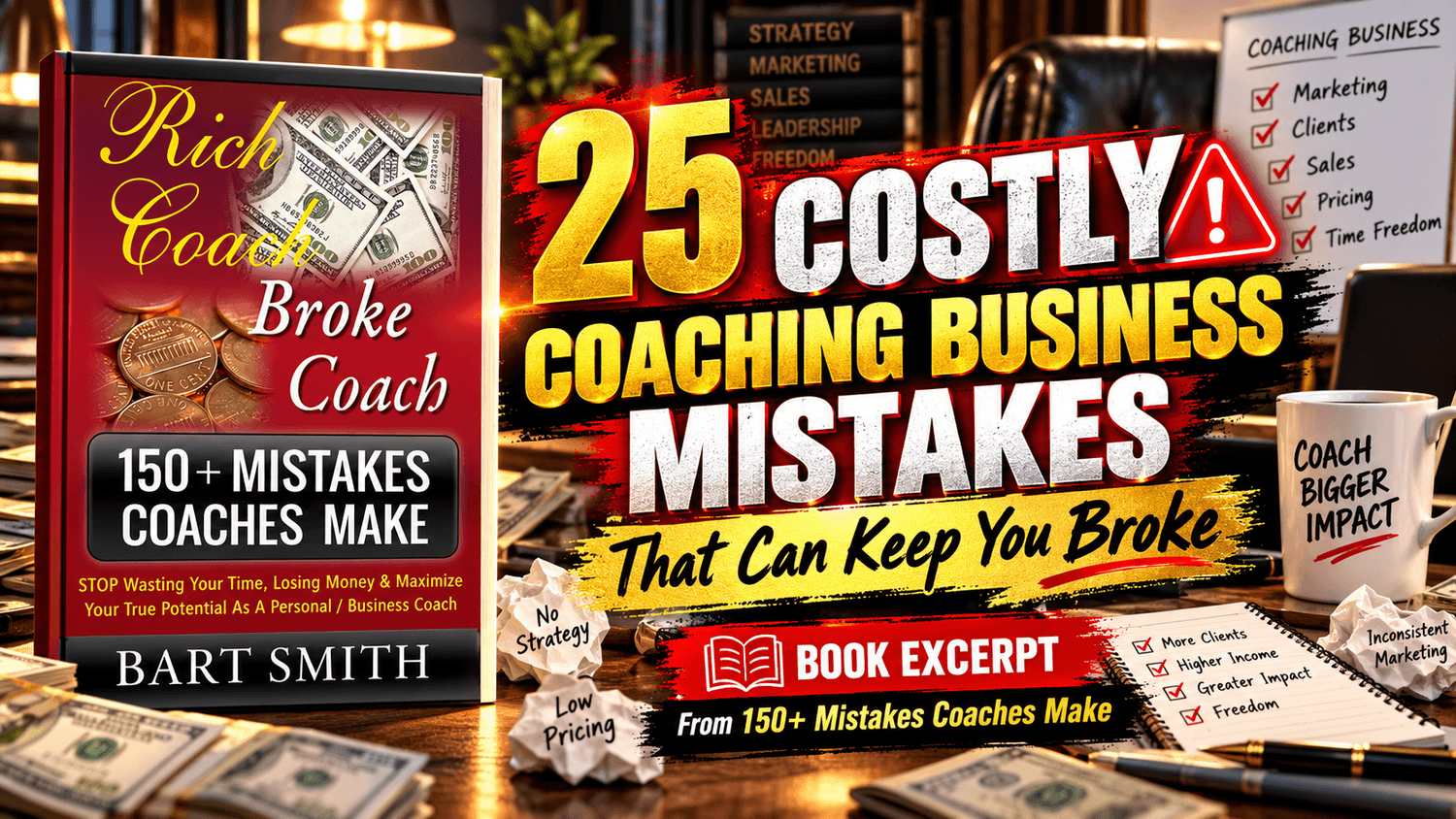
BOOK EXCERPT
📖 25 Costly Coaching Business Mistakes That Can Keep You Broke
Excerpted and adapted from 150+ Mistakes Coaches Make book by Bart Smith
Reprinted by Permission
Running a coaching practice means more than being good at coaching. You are also running a business, and the business side can create expensive problems when it is ignored.
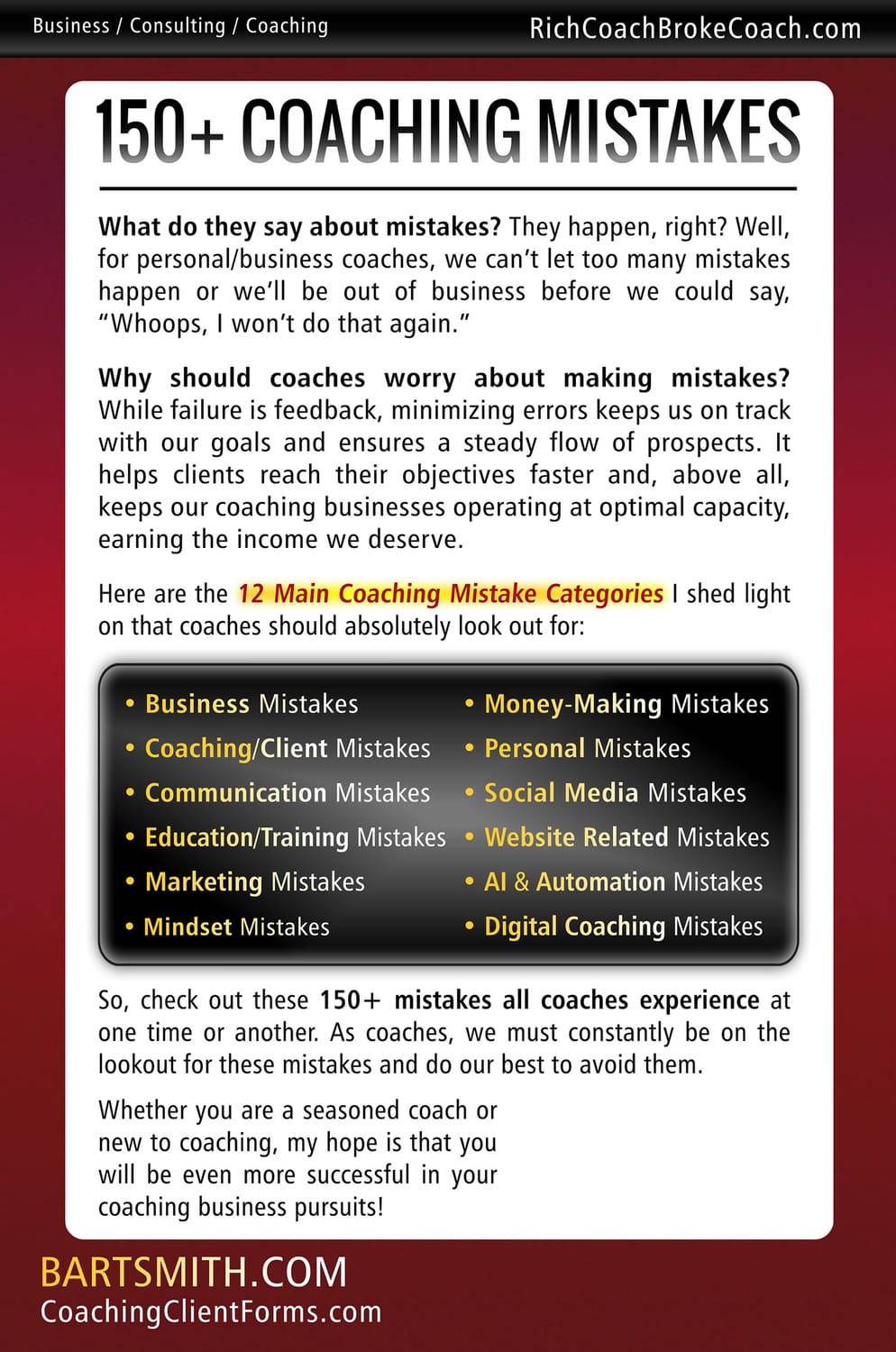
The following mistakes are drawn from the Business Mistakes section of 150+ Mistakes Coaches Make. Some cost money directly. Others cost time, credibility, opportunities, or momentum — and all of those eventually affect your bottom line.
Here are 25 costly coaching business mistakes worth watching for:
1. Failing to assess your coaching business when warning signs appear.
If you feel overworked, underpaid, overwhelmed, or out of control, stop and evaluate the business model. Warning signs are easier and cheaper to correct early than after they become crises.2. Constantly changing your business direction.
Jumping from one strategy, brand, website, or offer to another can waste time and money. Give proven activities enough time to work before rebuilding everything again.
3. Not filling your calendar with activities that grow your business.
A coaching practice rarely grows by accident. Schedule activities such as writing, speaking, webinars, workshops, networking, and helpful content creation.

4. Crossing professional boundaries with clients.
Clear professional boundaries protect the coach, the client, and the reputation of the business. Blurred boundaries can create ethical, emotional, and legal complications.
5. Not maintaining a financial reserve.
Illness, vacation time, or slow sales periods can interrupt income. A financial cushion gives you breathing room and keeps temporary problems from becoming emergencies.
6. Waiting until you are busy to implement systems.
Scheduling, payments, contracts, email marketing, and client management systems should be established before you are overwhelmed. Good systems make growth easier to manage.
7. Gossiping about clients.
Confidentiality is foundational to coaching. Casual conversations about clients can destroy trust and damage your reputation.
8. Ignoring legal protection.
Clear agreements, terms, payment policies, and expectations reduce misunderstandings and help protect both parties when problems arise.
9. Not clearly defining expectations with clients.
Clients should understand what coaching includes, what it does not include, how communication works, and what each side is responsible for.
10. Trying to build a coaching business alone.
Professional peers can provide referrals, collaboration, perspective, and support. Isolation often makes business problems harder to solve.
11. Refusing to hire help when needed.
Administrative work, bookkeeping, web maintenance, scheduling, and design can consume hours that should be spent coaching, marketing, or developing the business.
12. Ignoring the business side of coaching.
Helping people is the mission, but marketing, finances, taxes, sales, and operations keep the mission alive. A great coach still needs a functioning business.
13. Operating without a business plan.
Your plan does not have to be complicated. It should clarify your market, services, pricing, marketing activities, and growth goals so you have a direction to follow.
14. Poor organization and lack of task planning.
Without task lists, routines, and a structured workflow, important work falls through the cracks. Organization protects both productivity and follow-through.
15. Keeping difficult clients too long.
Some client relationships create far more stress and risk than value. When the fit is clearly wrong, ending the relationship professionally can protect your business.
16. Allowing office clutter and disorganization.
Physical and digital clutter waste time and attention. A cleaner workspace and organized files make it easier to focus on high-value work.
17. Not tracking income and expenses.
You need to know where money comes from and where it goes. Regular financial tracking helps you control spending, prepare for taxes, and identify profitable services.
18. Not tracking how your time is spent.
Time is one of a coach's most valuable resources. Tracking it often reveals hours being lost to low-value work instead of marketing, selling, and serving clients.
19. Seeing clients in your home.
A professional office, coworking space, or online meeting often provides clearer boundaries and reduces unnecessary personal and safety concerns.
20. Spending too little time on marketing.
Marketing is what keeps new prospects entering your world. If outreach stops, the pipeline eventually dries up.
21. Not joining local business groups.
Local networking groups, chambers, and business communities can create referrals, visibility, partnerships, and relationships that online marketing alone may not provide.
22. Not staying connected to industry associations.
Professional associations can provide education, research, networking, and updates that help you remain informed and competitive.
23. Failing to protect your intellectual property.
Unique program names, frameworks, tools, and branded systems can become valuable business assets. Protect them appropriately as your reputation grows.
24. Giving assistants or designers too much control.
Contractors can help manage domains, hosting, payment systems, and databases, but you should retain ownership, passwords, and ultimate control over critical business assets.
25. Offering services nobody is asking for.
Do not build offers only around what you want to teach. Listen to the market, study client problems, and create services people actually want and are willing to pay for.
A coach can be excellent at helping people and still struggle financially if the underlying business is weak. The goal is not perfection. The goal is awareness, correction, and stronger business habits.
Spot the expensive mistakes early, fix what you can, and keep building a coaching practice that supports both your clients and you.
(THIS CONTINUES IN THE BOOK)
# # #
WOULD YOU LIKE TO:
RETURN TO THE:
WOULD YOU LIKE TO:

Website Design by Bart Smith
© Bart Smith | All Rights Reserved