BART SMITH OFFICIAL WEBSITE • AUTHOR • YOUTUBER • COOKIE BAKER • COOKBOOK CHEF • FUTURES TRADER


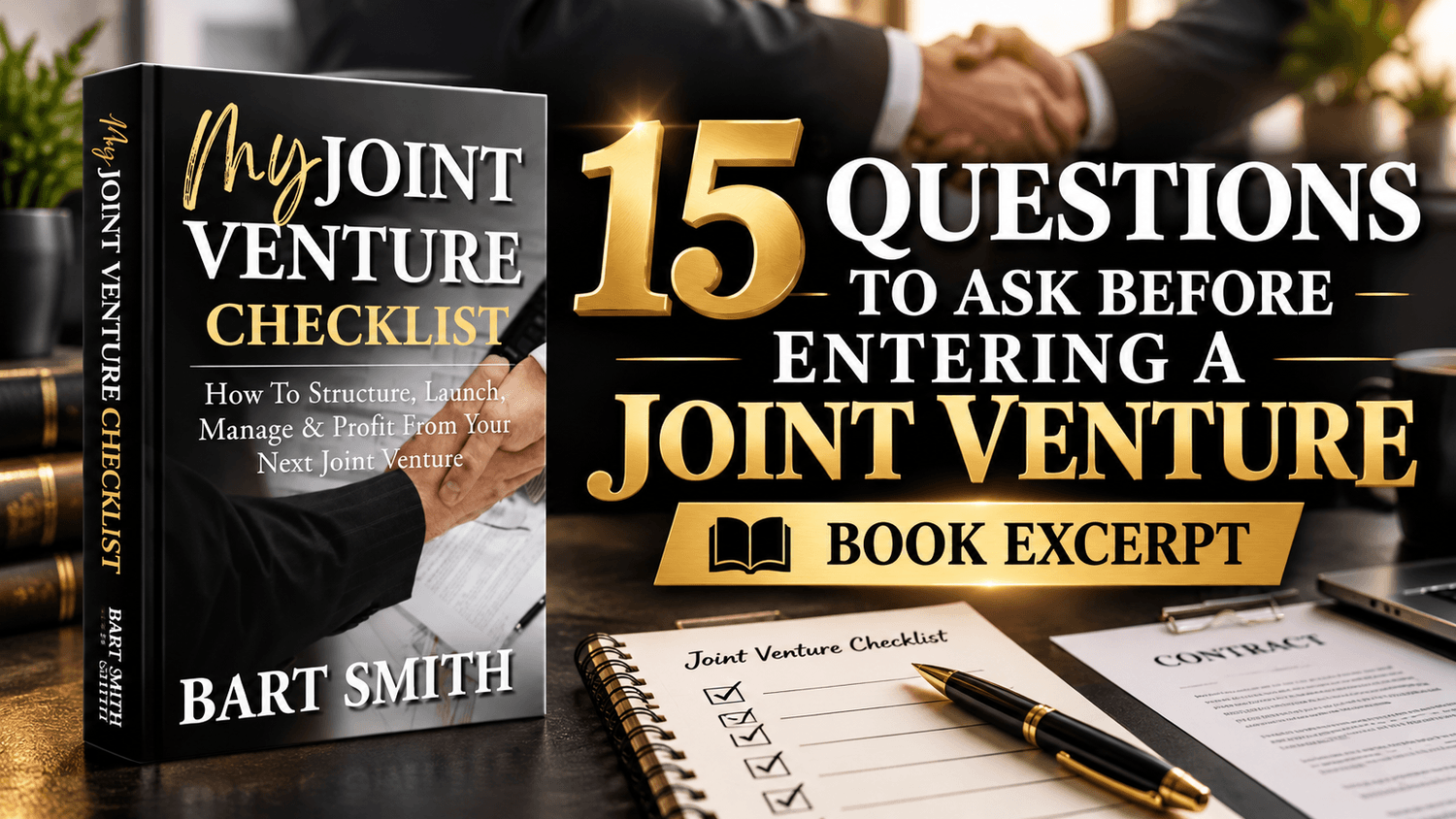
BOOK EXCERPT
📖 15 Questions To Ask Before Entering A Joint Venture Partnership
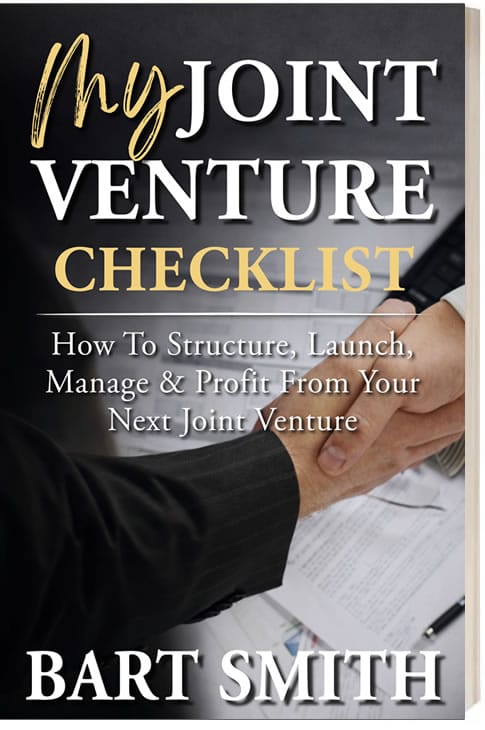
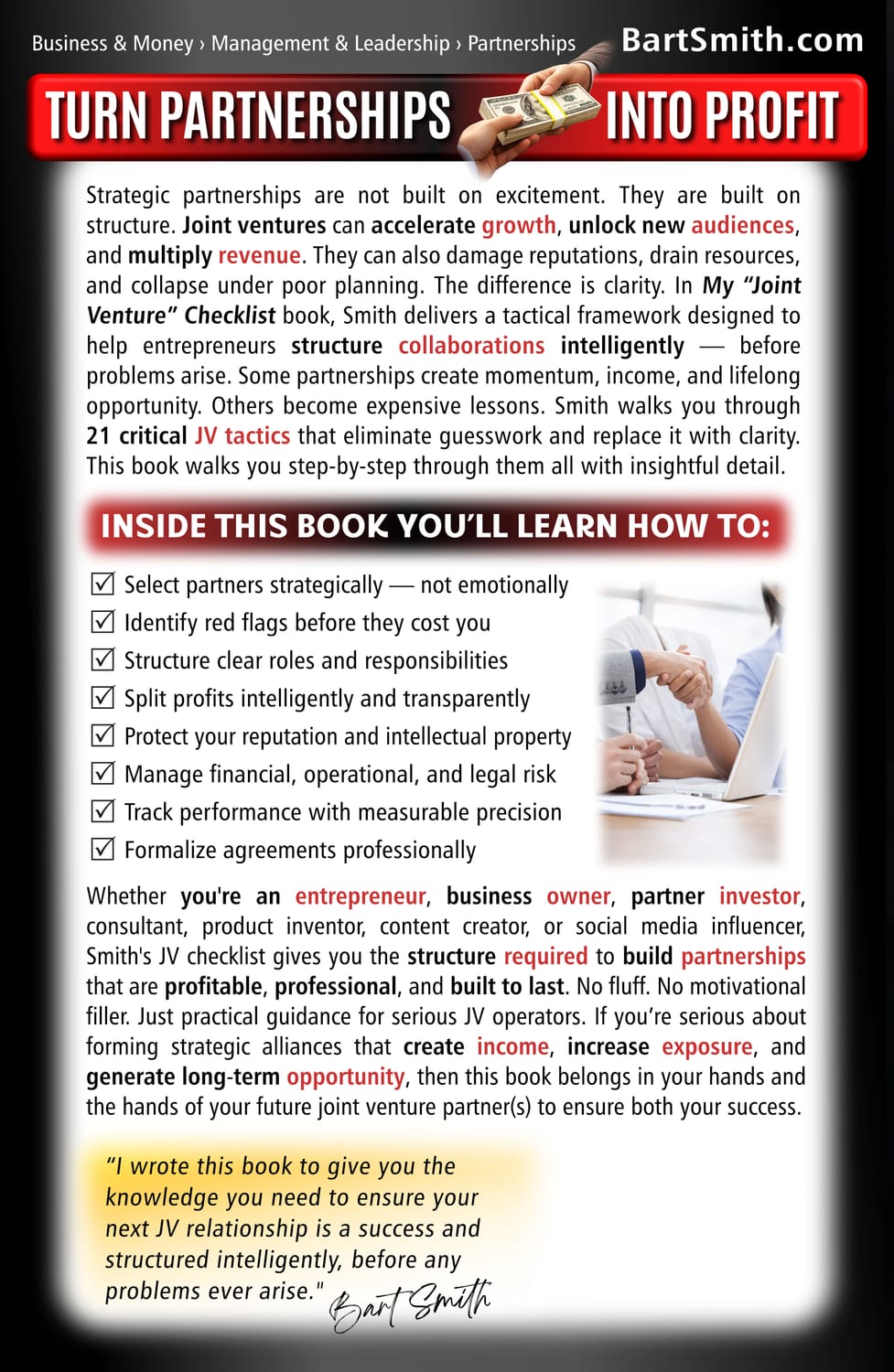
Excerpted and adapted from My Joint Venture Checklist book by Bart Smith
Reprinted by Permission
A joint venture can create income, exposure, audience growth and long-term opportunity - but only when both sides know exactly what they are getting into.
The biggest problems usually do not begin after launch. They begin before launch, when important questions never get asked, expectations stay vague and assumptions replace written decisions.
Before you enter a joint venture, slow down long enough to get clarity. These 15 questions can help uncover weak assumptions, mismatched expectations and avoidable risks before they become expensive problems.
Ask these questions before the first promotion goes live:
1. Why are we entering this joint venture?
Define the primary objective. Are you trying to grow a list, generate revenue, enter a new market, create a new product, strengthen brand positioning, gain exposure or build a long-term strategic alliance? A joint venture without a clear purpose becomes difficult to measure and easy to misunderstand.
2. What does each partner bring to the table?
Identify the real contribution from both sides: audience access, expertise, products, technology, capital, marketing ability, content, fulfillment systems, credibility or operational support. Mutual benefit should be visible before the deal begins.
3. Are our audiences truly aligned?
A large list does not automatically mean a good fit. Look for relevance, overlap and buying behavior. A smaller but highly aligned audience may outperform a much larger audience with weak interest.
4. Do our values and reputations fit together?
Your reputation becomes connected to the person or company you partner with. Review how they market, serve customers, handle complaints and conduct themselves publicly.
5. What exactly are we creating or promoting?
Be specific. Are you promoting an existing offer, co-creating something new, bundling products, hosting an event, launching a course or building a recurring program? Vague intentions produce vague outcomes.
6. What problem will this joint venture solve for the customer?
The offer should exist because it creates real value for the audience. Do not build something only because the partnership sounds exciting.
7. How long will the joint venture run?
Decide whether the relationship is a short promotion, a launch window, a several-month campaign, an evergreen arrangement or a long-term alliance. Duration affects agreements, workload, tracking and expectations.
8. Who is responsible for what?
Define roles before launch. Clarify who creates the offer, writes copy, builds pages, sends emails, manages support, handles technology, approves creative assets and solves problems.
9. How will revenue and profits be divided?
Agree on the split, the calculation method, what expenses come out first, how refunds and chargebacks are handled, when payouts occur and who has access to the numbers.
10. Who owns the intellectual property?
If you are creating a course, book, webinar, software, training program or other asset together, decide who owns what and what happens to those assets if the partnership ends.
11. How will expenses be handled?
Identify development costs, advertising, software, contractors, customer support, payment processing and other expenses. Decide whether they are shared, capped or paid by one party.
12. How will performance be tracked?
Agree on the metrics that matter: leads, sales, conversion rate, refunds, customer acquisition, audience growth, engagement, recurring revenue or other outcomes.
13. How will we communicate during the project?
Set expectations for meetings, reporting, approvals, response times and decision-making. Poor communication can damage a promising partnership quickly.
14. What happens if something goes wrong?
Discuss uncomfortable scenarios before launch: weak sales, high refunds, technical failure, missed deadlines, underperformance, customer complaints or public criticism.
15. How do we end, renew or expand the joint venture?
Define review dates, exit conditions, termination clauses and what happens after the first campaign. A professional joint venture plans for the ending as carefully as the beginning.
FINAL THOUGHT
A joint venture should increase leverage, not increase confusion. The more questions you answer before launch, the fewer surprises you are forced to solve under pressure later. Clarity protects profit. Preparation protects relationships.
(THIS CONTINUES IN THE BOOK)
# # #
WOULD YOU LIKE TO:
RETURN TO THE:
WOULD YOU LIKE TO:

Website Design by Bart Smith
© Bart Smith | All Rights Reserved